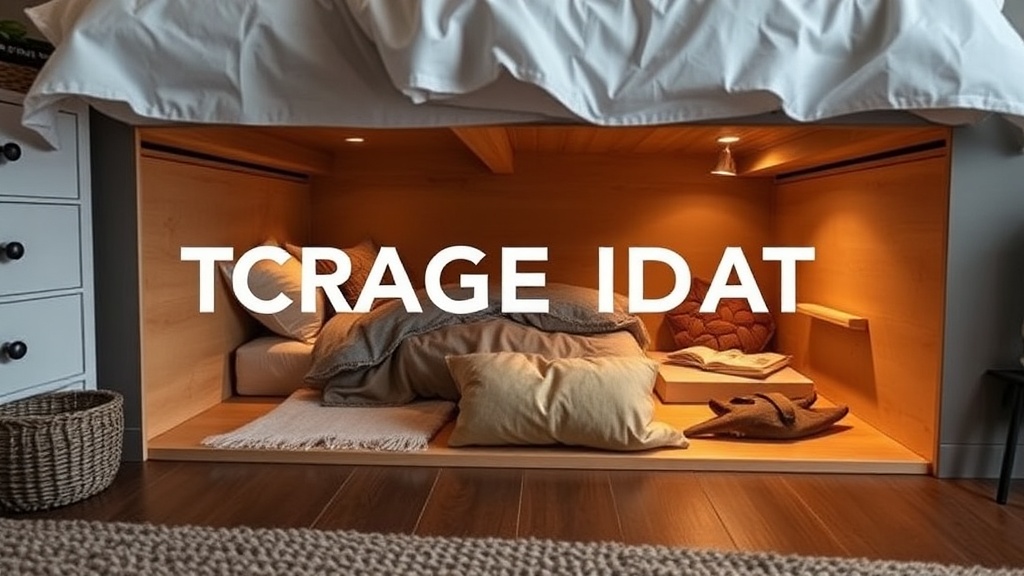
10 Clever Under-Bed Storage Ideas to Maximize Your Space

What Can You Store Under Your Bed to Save Space?
That unused rectangle beneath your bed frame represents prime real estate in any home—whether you're working with a cramped studio apartment in Manhattan or a spacious master bedroom in Nashville. This guide covers ten practical under-bed storage solutions that transform dead space into functional organization. You'll learn which items work best in low-clearance areas, discover specific products worth your money, and understand how to protect belongings from dust and moisture. The goal isn't just to hide clutter—it's to create a storage system that actually makes your daily routine smoother.
How Much Clearance Do You Need for Under-Bed Storage?
Most storage solutions require at least 5 inches of vertical space between your mattress foundation and the floor. Platform beds with built-in drawers need 10 to 12 inches. That said, even beds sitting just 4 inches off the ground can accommodate flat storage bags designed for linens and out-of-season clothing.
Measure carefully before buying anything. Slide a tape measure under the bed at multiple points—frames aren't always perfectly level, especially on older hardwood floors. Don't forget to account for baseboards or heating vents that might reduce usable depth. The last thing you want is a rolling drawer that catches on quarter-round molding every time you pull it out.
For metal bed frames, check whether the legs are adjustable. Many manufacturers design their frames to accommodate risers—those plastic or wood blocks that lift the entire bed several inches higher. The Bed Bath & Beyond Home Collection sells heavy-duty risers rated for up to 1,200 pounds, but verify your frame's weight capacity first. A loaded bed with two adults plus storage can easily exceed 800 pounds.
Are Plastic Storage Bins Better Than Fabric Under the Bed?
It depends entirely on what you're storing and your local climate. Plastic bins with tight-fitting lids win for moisture protection—critical in humid regions like the Gulf Coast or Pacific Northwest. Fabric organizers with zipper closures breathe better, making them ideal for natural fiber items like wool blankets that need air circulation to prevent mustiness.
| Feature | Plastic Bins (Sterilite/Rubbermaid) | Fabric Organizers (Simplify/Songmics) |
|---|---|---|
| Moisture protection | Excellent—watertight lids available | Poor—canvas absorbs humidity |
| Dust resistance | Complete seal with latched lids | Zipper closures adequate |
| Stacking ability | Modular designs stack securely | Collapses when empty; limited stacking |
| Accessibility | Clear sides show contents instantly | Requires labeling or unzipping |
| Weight capacity | 40-60 lbs per bin typical | 20-30 lbs before sagging |
| Best use case | Documents, electronics, photos | Bedding, clothing, soft items |
The catch? Cheap plastic cracks in cold temperatures—something to consider if your bedroom sits above an uninsulated garage. Polypropylene bins (the slightly flexible ones) handle temperature swings better than rigid acrylics. For fabric lovers, look for organizers with PVC-coated interiors like those from The Container Store's Under Bed Storage collection—they offer a middle ground between breathability and protection.
What Are the Best Rolling Drawers for Under-Bed Storage?
Drawers on casters eliminate the awkward sliding-and-lifting dance that makes under-bed storage annoying. The IKEA MALM bed series includes purpose-built drawers at $99 each—birch veneer over particleboard with smooth-rolling wheels. They fit the MALM frame perfectly but work with any platform bed measuring at least 78 inches long with 11-inch clearance.
For metal frames or custom setups, the Whitmor Rolling Underbed Cart offers a simpler solution. At roughly $35 from Amazon or Target, it's a flat metal frame with four wheels and fabric sides. Assembly takes ten minutes. The low profile (3.5 inches) fits almost anywhere, though the canvas bottom won't support heavy items like books or tools.
Here's the thing about casters: not all wheels are created equal. Hard plastic wheels rattle on hardwood and can leave marks. Rubber or thermoplastic elastomer wheels roll quieter and grip better on carpet. If your bedroom has thick pile carpet, avoid drawers with wheels smaller than 2 inches in diameter—they'll sink and drag rather than glide.
DIY Drawer Alternatives
Old dresser drawers repurposed as under-bed storage cost nothing and add character. Sand lightly, attach four furniture casters (about $8 at Home Depot), and you've got custom rolling storage. Paint the front-facing edge to match your bed frame for a cohesive look. The drawer depth determines what fits—shallow dresser drawers (4-5 inches) work for shoes and accessories; deeper ones (8+ inches) swallow bulky sweaters and extra pillows.
How Do You Store Shoes Under the Bed Without Creating a Mess?
Shoes present a unique challenge—soles carry dirt, they retain odors, and pairs separate easily in large bins. Dedicated under-bed shoe organizers solve these problems through compartmentalization. The Wayfair Basics Underbed Shoe Organizer features twelve clear pockets arranged in two rows, accommodating up to men's size 13. The zippered cover keeps dust off leather while the breathable polypropylene fabric prevents the plastic-bag sweat that ruins suede.
For athletic shoes and everyday sneakers, consider the Songmics Foldable Shoe Storage Boxes—sold in sets of six for around $25. Each box holds one pair up to size 12, with clear drop-front doors that let you grab shoes without unstacking anything. They're designed for closets but work beautifully lined up under a platform bed with 7+ inches of clearance.
Worth noting: boots don't fit standard shoe organizers. Store them heel-out in a long, shallow bin—the IRIS 41-Quart Underbed Box accommodates most ankle boots lying flat. Knee-high boots need to be rolled carefully or stored elsewhere; crushing them into flat storage damages the shaft structure.
Can You Store Clothes Long-Term Under the Bed?
Yes—with proper preparation. Under-bed environments fluctuate more than closet interiors, especially regarding temperature and humidity. Natural fibers (cotton, linen, wool) survive these conditions better than synthetics, which can develop permanent creases from compression. Always clean items thoroughly before storage—body oils and food stains attract insects and worsen over time.
Vacuum storage bags maximize capacity but aren't ideal for everything. The Spacesaver Premium Vacuum Bags compress bulky comforters to one-third their original size, creating space for additional items. That said, down-filled bedding shouldn't stay compressed indefinitely—the feathers lose loft and insulating properties. Rotate vacuum-sealed items every six months, allowing them to expand and breathe.
For everyday clothing rotation, fabric storage bins with dividers work better. The Simplify Underbed Storage Chest comes with adjustable cardboard inserts that separate sweaters from jeans. Cedar planks or lavender sachets tucked inside repel moths naturally without the chemical smell of traditional mothballs. Replace cedar every season—once it stops smelling fragrant, it's lost effectiveness.
What About Under-Bed Storage for Kids' Rooms?
Children's bedrooms demand storage that grows with changing needs. The Delta Children Underbed Storage Drawer (designed for their convertible cribs) transitions from holding diapers and wipes to storing LEGO sets and art supplies. Its hardwood construction withstands the abuse kids dish out—plastic alternatives crack when stepped on or used as impromptu seating.
Toys with small pieces require compartmentalized solutions. The mDesign Underbed Storage Organizer features twelve divided sections perfect for action figures, craft supplies, or building sets. Unlike open bins, the zippered cover prevents the midnight catastrophe of stepping on scattered LEGOs. For stuffed animals (which somehow multiply overnight), large breathable fabric hampers slide easily under loft beds and bunk beds.
Here's the thing with kids: accessibility matters more than aesthetics. Storage they can't reach independently won't get used. Low-profile bins with handles on the long side allow children to pull items out without adult help. Label everything with pictures for pre-readers—draw a shirt icon on the bin holding pajamas, a ball icon for outdoor toys.
How Do You Protect Stored Items From Dust and Pests?
Even in seemingly clean bedrooms, dust accumulates under beds at alarming rates—partly due to poor air circulation in that low zone. All storage containers need complete closure mechanisms. Partially open bins actually concentrate dust inside through a chimney effect as air circulates around them.
For maximum protection, sealable bins with silicone gaskets outperform snap-lid alternatives. The Rubbermaid Brilliance Storage series uses latches on all four sides creating an airtight seal—tested against pantry moths and silverfish in humid Florida conditions. They're pricier than basic Sterilite bins (roughly $18 versus $8 for similar sizes) but protect irreplaceable items like wedding albums or heirloom quilts.
Pest control starts with exclusion but continues with monitoring. Slip a few TERRO Pantry Moth Traps under the bed—odorless, pesticide-free sticky traps that catch adults before they lay eggs in natural fibers. Check them quarterly. If you see catches increasing, inspect stored items immediately before infestations spread.
What Creative Solutions Work for Platform Beds With Limited Clearance?
Some modern platform beds sit barely 3 inches off the floor—too low for bins but not useless. Flat storage bags like the StorageRight Compression Bags measure just 2 inches thick when filled with linens. They slide under on their own or stack in layers for categorized organization (guest bedding on bottom, seasonal items above).
Bed skirts with built-in pockets offer another low-clearance option. The SpaceMaker Underbed Storage Bedskirt from Amazon replaces your traditional dust ruffle with a design featuring six fabric pockets hanging beneath the mattress platform. Each pocket holds roughly 3 pounds—perfect for slippers, reading materials, or tablet devices. Installation requires lifting the mattress, but once in place, access is instantaneous without bending.
For DIY enthusiasts, attaching caster wheels directly to vintage suitcases creates charming, mobile storage. Thrift stores overflow with hard-shell luggage from the 1960s and 70s—Samsonite Silhouette cases, American Tourister hardtops. Clean thoroughly, attach four 2-inch swivel casters to the bottom corners, and you've got rolling storage with character. The rigid structure protects contents better than fabric alternatives, and the handles make retrieval effortless.
Final Thoughts on Making Under-Bed Storage Work
Under-bed storage succeeds when it matches your actual habits, not an imagined ideal. Beautiful woven baskets mean nothing if you'll never lift them out to access contents. Rolling drawers you can't afford sit empty while clutter accumulates on nightstands. Start with what frustrates you most—shoes scattered across the floor? Out-of-season clothes hogging closet space?—and choose solutions specifically addressing that pain point.
Measure twice. Buy once. And remember that the best storage systems evolve—what works for a single professional differs dramatically from what serves a family with young children. Reassess annually as needs change. The space beneath your bed offers too much potential to waste on forgotten items and dust bunnies.