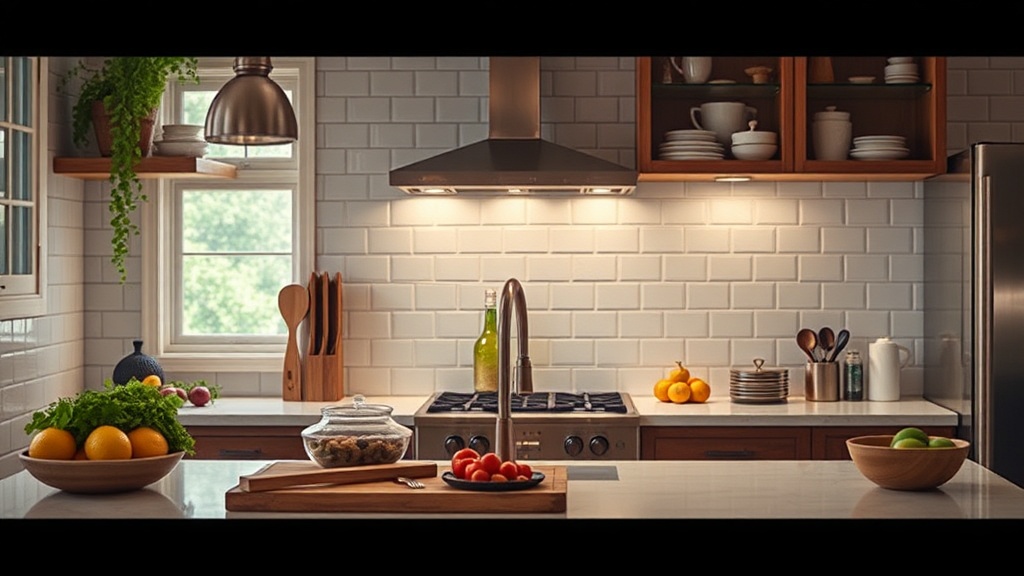
7 Clever Ways to Use Kitchen Countertops for More Prep Space

Tiered Countertop Shelving
Magnetic Knife Strips
Under-Cabinet Hanging Racks
Rolling Kitchen Cart Solutions
Corner Countertop Organizers
Over-the-Sink Drying Racks
Modular Appliance Stations
Are you tired of playing a game of Tetris with your cutting boards just to find a spot to chop an onion? Most kitchen layouts suffer from a lack of functional surface area, but you don't always need a full remodel to fix it. This post explores seven practical methods to expand your usable counter space through smart organization, specialized tools, and clever structural shifts. We'll look at how to reclaim every inch of your countertops so you can actually enjoy cooking without the clutter.
How Can I Increase My Countertop Space?
You can increase your countertop space by incorporating tiered organizers, using oversized cutting boards that bridge the sink, and clearing unnecessary appliances from the surface. It's often about making what you have work harder rather than just buying more stuff. Most people forget that the space above the counter is just as valuable as the space on it.
If you're feeling cramped, look at your current setup. Are your coffee maker, toaster, and air fryer all fighting for the same six inches of granite? Moving even one item to a lower cabinet or a dedicated appliance garage can change your entire workflow. If you're dealing with a tiny studio apartment, you might want to check out my previous thoughts on how to maximize small spaces because the principles apply heavily to kitchens too.
1. The Sink Bridge Method
One of the fastest ways to gain a few extra inches is to use a "sink bridge." This is essentially a large, flat cutting board designed to sit right over your sink basin. It turns a dead zone into a high-functioning prep station. It's a lifesaver when you're prepping a large batch of vegetables and the main counter is already occupied by a mixing bowl.
Look for boards made of heavy-duty wood or high-density polyethylene. You want something sturdy enough that it won't slip or wobble while you're working. Brands like Williams Sonoma often carry heavy-duty wooden boards that fit this description perfectly. It's a simple fix—literally—that adds immediate utility to your kitchen.
2. Tiered Countertop Organizers
Verticality is your best friend in a small kitchen. Instead of laying everything flat on the counter, use tiered stands to stack items. Think of a two-tiered spice rack or a tiered fruit basket. This keeps your items visible but reduces their "footprint" on the surface.
A tiered stand allows you to keep your most-used oils or salt cellars in one spot without taking up the entire length of the counter. It also creates a visual boundary that keeps the kitchen looking organized rather than just messy. (And yes, it looks much more intentional than a pile of bottles.)
3. Magnetic Knife Strips
Standard knife blocks are bulky and take up a massive amount of real estate. A magnetic knife strip—like the ones you see from पेशेवर (Professional) brands or even basic versions from IKEA—mounts directly to the backsplash. This clears up the counter space usually reserved for a heavy wooden block.
It's not just about space; it's about accessibility. You can grab a chef's knife without moving other items around. Plus, it keeps your blades away from moisture, which is a win for hygiene. If you're worried about safety, just ensure the strip is mounted securely to a solid wall surface.
4. Rolling Kitchen Carts
If your counters are permanently full, you need a secondary surface. A rolling kitchen cart or a butcher block trolley can act as a mobile prep station. You can wheel it near the stove when you're cooking and tuck it into a corner when you're done.
This is a great way to separate "prep" from "serving." For example, use the cart for all your chopping and mixing, then move it to the dining area when it's time to eat. It’s a flexible solution that doesn't require permanent construction. You might even find that a small Target brand utility cart works just as well as a high-end piece of furniture.
What Are the Best Countertop Accessories for Small Kitchens?
The best accessories are those that offer multi-functionality and can be easily tucked away when not in use. Look for items that serve a specific purpose but don't dominate the visual field. A good rule of thumb is to prioritize items that have a "home" outside of the countertop, such as a drawer or a pantry.
Here is a quick comparison of common countertop items and how they impact your space:
| Item Type | Space Impact | Best Use Case |
|---|---|---|
| Knife Block | High (Bulky) | Traditional kitchens with ample room. |
| Magnetic Strip | Low (Vertical) | Small kitchens or limited counter space. |
| Tiered Stand | Medium (Vertical) | Organizing spices, oils, or fruit. |
| Sink Bridge | Variable (Temporary) | Heavy prep work or meal prepping. |
5. Appliance Garages and Hidden Stations
If you have the budget or the layout allows, an appliance garage is a total game-changer. This is essentially a small cabinet or a dedicated nook with a door (often a tambour door) that sits on your countertop. It allows you to keep your heavy-duty items like blenders and mixers out of sight and out of the way.
When you're cooking, you don't want to see a cluttered mess of wires and plastic. An appliance garage keeps the "visual noise" low. It's a way to have everything within reach without the kitchen looking like a warehouse. Even if you don't have a built-in, a dedicated tray or a decorative box can act as a "mini-garage" to group items together.
6. Wall-Mounted Rails
Don't ignore your walls. If your counters are full, look up. A wall-mounted rail system—the kind often used in professional kitchens—can hold much more than just utensils. You can hang measuring spoons, small strainers, or even lightweight pots.
This keeps the "prep" tools off the surface and up on the wall. It's an efficient way to use the vertical space between your countertop and your upper cabinets. Most of these systems are easy to install and don't require a contractor. Just make sure you're drilling into a stud or using high-quality adhesive hooks if you're renting.
7. The "One-In, One-Out" Rule
This isn't a physical tool, but it's a strategy. If you're going to add a new appliance to your counter, something else has to go. This might mean moving that old bread maker you haven't used since 2019 into the deep pantry or a storage bin.
The biggest enemy of countertop space is the "just in case" item. We tend to keep things on the counter because they're easy to grab, but if you only use them once a month, they shouldn't be there. Be ruthless. If an item doesn't earn its keep on the counter through daily use, find it a new home in the cupboard or a storage box. For more tips on keeping things organized, you might find my guide on organizing for easy access helpful.
The goal is to create a workspace that feels intentional. A cluttered counter isn't just a visual problem; it's a functional one. When you're trying to bake a cake or prep a holiday meal, every inch of surface area matters. By using these seven methods, you can transform a cramped kitchen into a high-functioning workspace that actually works for you.