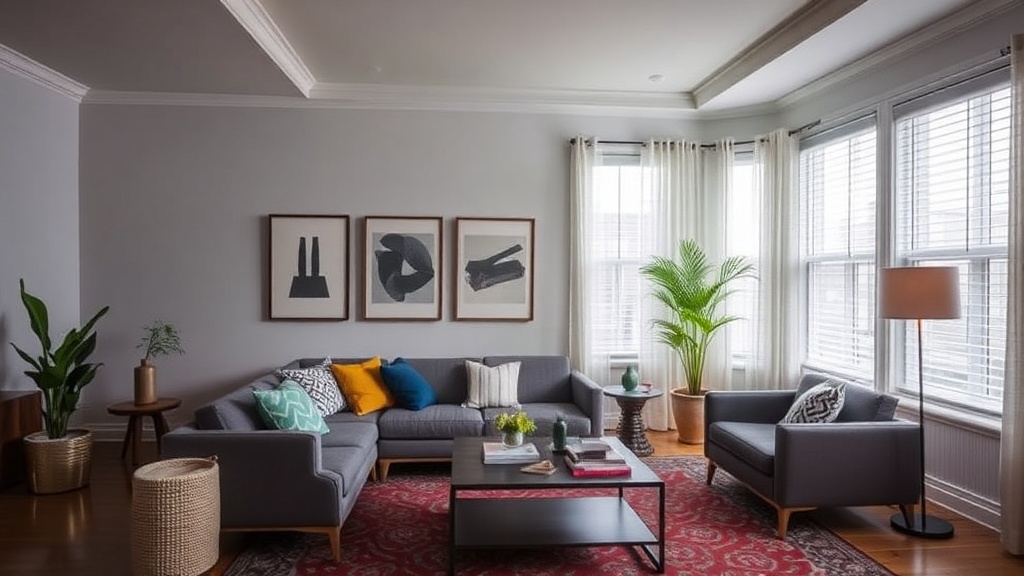
Beyond the Sofa: Clever Strategies for a Small Living Room That Lives Large

How can you make a small living room feel bigger than it is?
You’ve finally found your perfect apartment, perhaps it’s the vibrant neighborhood, the incredible natural light streaming in, or that charming, unexpected architectural detail. But then you walk into the living room—and it’s… undeniably cozy. The kind of cozy that immediately sparks a mental inventory: will my beloved three-seater sofa even fit through the door, let alone leave enough space to actually live? This scenario is incredibly common, and this guide is precisely for anyone facing that exact dilemma: how to transform a seemingly cramped living room into a functional, inviting, and surprisingly spacious-feeling hub. We’re going to dissect smart furniture choices, explore clever layout strategies, and reveal design tricks that make the most of every single square inch. Our goal is to ensure your small space doesn’t just feel livable, but genuinely expansive and tailored to your lifestyle.
It’s a common misconception that a small room is simply a small room, full stop. But the truth is, much of our perception of space comes down to visual cues and psychological tricks. The right design choices can profoundly influence how a living room feels, making it appear far more generous than its actual footprint. One of the simplest—and often most powerful—tools at your disposal is your color palette. Opt for lighter, neutral shades on your walls and for larger, foundational furniture pieces. Think soft, ethereal grays, warm, inviting whites, or serene, pale blues and greens. These hues aren't just aesthetically pleasing; they actively reflect light, visually pushing the walls outward and contributing to an airy, open atmosphere. Conversely, darker colors, while undeniably chic in some contexts, tend to absorb light, which can unfortunately make a room feel smaller, more enclosed, and sometimes even a bit suffocating.
Beyond color, lighting plays an absolutely starring role in spatial illusion. Maximizing natural light is paramount wherever possible; keep window treatments light, minimal, and unobtrusive. Consider sheer panels that diffuse light beautifully or sleek blinds that can be raised fully during the day. If heavy drapes are a must for privacy or insulation, make sure they stack neatly to the sides, clearing as much of the window frame as possible. When it comes to artificial lighting, layering is your friend. Instead of relying solely on a single overhead fixture, which can create harsh shadows and dead spots, incorporate a thoughtful mix of ambient, task, and accent lighting. A tall floor lamp positioned in a dimly lit corner, a charming small table lamp on a side table to create a warm glow, and even some decorative string lights or sconces can eliminate those shadowy areas that visually shrink a room. The more uniformly and thoughtfully lit a room is, the demonstrably larger and more welcoming it feels.
Don’t, for a moment, underestimate the power of a well-placed mirror. Mirrors are akin to design magic in small spaces because they not only bounce light around, making a room brighter and more vibrant, but they also create a compelling illusion of depth. This effectively doubles the visual square footage, expanding the perceived boundaries of the room. Try placing a large mirror directly opposite a window to reflect natural light and, ideally, an appealing view outside. Alternatively, positioning one behind a sofa or over a console table can add a sophisticated sense of expansiveness. Just be meticulously mindful of what the mirror reflects; you want it to bounce back something attractive and organized, not a cluttered corner or an unmade bed from an adjacent room.
Finally, dedicate thought to the visual flow and sightlines within your room. Furniture with exposed legs—think elegant mid-century modern style sofas, armchairs, or coffee tables—allows light and sightlines to pass freely underneath. This design choice makes the room feel less heavy and considerably more open. This transparency helps maintain a continuous visual path, preventing the eye from stopping abruptly at solid, bulky furniture bases. Crucially, always ensure there are clear, unobstructed pathways around your furniture. You should never have to awkwardly squeeze past a coffee table or execute a tight pivot around an armchair to move through the room. Easy, fluid movement contributes immensely to a feeling of overall spaciousness and comfort.
What kind of furniture works best in a compact living area?
In a small living room, where every single inch truly counts, your furniture simply has to earn its keep—and preferably, in more ways than one. The undeniable golden rule for compact living rooms is to embrace multi-functional pieces with open arms. Consider an ottoman that not only serves as extra seating or a footrest but also boasts hidden storage for blankets, remote controls, or magazines. It’s an absolute win-win. A stylish sofa that effortlessly converts into a comfortable bed for occasional guests? That’s not just furniture; it’s a lifesaver. Nesting tables, those clever sets of tables that tuck neatly inside one another, can be pulled out as needed for drinks, snacks, or a temporary workspace, then just as easily tucked away to reclaim floor space. Look actively for items that can perform double, or even triple duty, thereby freeing up valuable real estate that dedicated single-purpose items would irrevocably consume.
Scale is another absolutely critical factor that homeowners often overlook. Resist the powerful, albeit often misguided, urge to cram a sprawling, oversized sectional into a tiny room. While a large sofa might be your dream, it can overwhelm a small space, making it feel even smaller. Instead, make judicious choices and select appropriately sized furniture. A slim-arm sofa, for instance, often provides the same comfortable seating capacity as a bulky, wide-arm version but occupies significantly less visual and physical space. Loveseats, armless accent chairs, and smaller-scale recliners are almost always superior choices compared to their massive, oversized counterparts. Before you make any purchase, measure, measure, measure—not just the furniture itself, but also the dimensions of your room, the pathway it will take to get into the room, and, most importantly, how much usable space it will leave once it’s in its intended position. Even taping out furniture footprints on the floor with painter's tape can be incredibly helpful.
When floor space is a premium, look up! Vertical storage solutions are the undisputed small-space superheroes. Tall, narrow bookshelves that draw the eye upward, sleek wall-mounted shelving units that float above the floor, and even custom floor-to-ceiling built-ins can provide substantial, much-needed storage without eating into your precious square footage. Open shelving offers wonderful opportunities to display decorative items, cherished books, or curated collections, while closed cabinets cleverly hide away clutter, striking a perfect balance that prevents the room from feeling overwhelmed or too busy. Don't overlook other wall-mounted options for things like your television, a discreet fold-down desk, or even small, floating bar cabinets. Keeping the floor clear maximizes pathways and enhances the crucial sense of openness. For a wealth of innovative ideas on maximizing vertical space, check out