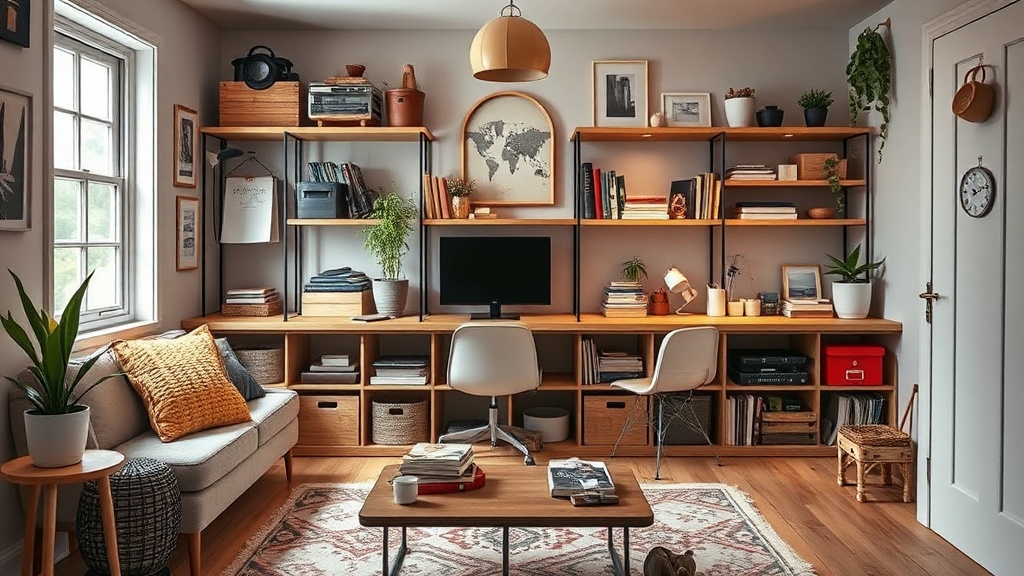
Clever Storage Hacks for Small Spaces That Maximize Every Inch

How Can You Maximize Storage in a Tiny Apartment?
The answer is simple: look up, look under, and look behind everything. Small spaces demand creativity, but they don't require a massive budget or a contractor's license. This guide walks through practical, proven storage solutions that reclaim square footage you didn't know you had—without making your home feel like a warehouse.
Here's the thing: most small apartments have plenty of room. It's just poorly distributed. Vertical space goes ignored. Nooks sit empty. Furniture serves only one purpose. With a few strategic changes, you'll find storage potential in places you've never considered.
The Vertical Advantage
Walls are free real estate. Floor space costs money; wall space is a gift.
Install floating shelves in kitchens to replace bulky cabinets. The Wallniture Philly floating shelves (around $45 for a three-pack on Amazon) hold spices, cookbooks, and small plants without eating counter space. Mount them above windows, beside mirrors—anywhere there's dead wall.
In bedrooms, consider a storage headboard. The Prepac Full/Queen Bookcase Headboard runs about $200 and adds six shelves right where you need them. No more nightstands hogging floor space.
For bathrooms, over-the-toilet shelving units transform awkward gaps into linen closets. The HOOBRO Over-The-Toilet Storage Rack ($60-$80) fits most standard toilets and adds three tiers of storage. It's not glamorous. It works.
What Are the Best Multi-Functional Furniture Pieces for Small Spaces?
Ottomans with storage, bed frames with drawers, and tables that expand or collapse top the list. Every piece of furniture in a small home should earn its keep—ideally in two or three different ways.
The Ikea BRIMNES series deserves serious consideration. The daybed with storage drawers ($449) functions as a sofa, guest bed, and dresser. The headboard with shelves ($130) eliminates nightstands entirely. It's not heirloom-quality furniture—particleboard and veneer—but it'll last five to ten years with normal use, and the price leaves room in your budget for other upgrades.
For living rooms, consider a storage ottoman like the Christopher Knight Home Richmond ($180). It holds blankets, board games, or winter accessories. Extra seating when guests arrive. A footrest during movie night. Three functions, one footprint.
Here's the thing: Murphy beds have evolved. The Lori Wall Bed (starting at $799) requires no mechanical springs or pistons—just solid wood and clever geometry. It folds vertically into a cabinet when not in use, freeing up 30-40 square feet of floor space. That's enough room for a yoga mat, a desk, or a play area.
The catch? Multi-functional furniture often costs more upfront. That said, replacing three pieces with one usually saves money long-term. Do the math before buying single-purpose items.
The Under-Bed Goldmine
Most bed frames leave 12-18 inches of dead space underneath. That's roughly 25-40 cubic feet of storage—enough for offseason clothing, extra linens, or sentimental items you can't part with.
Flat storage bins with wheels slide easily. The Sterilite Underbed Storage Box ($25 each) has a clear lid so you can see contents without pulling everything out. For something more attractive, the Captain's Beds from Pottery Barn Teen (starting at $899) come with built-in drawers on heavy-duty glides.
Don't forget the bed skirt trick. A tailored skirt from Target's Threshold line ($30) hides plastic bins from view, keeping the room looking intentional rather than cluttered.
How Do You Organize a Small Kitchen With No Pantry?
Magnetic strips, door-mounted racks, and cabinet organizers turn every surface into storage. You don't need a walk-in pantry to keep a kitchen functional—you need to stop wasting the space you already have.
Start with the backs of cabinet doors. The YouCopia StoreMore Pan and Lid Organizer ($25) mounts inside deep cabinets and holds up to six pans vertically. Lids slide into dedicated slots. Suddenly that jumbled stack of cookware becomes accessible.
Magnetic knife strips (the Schmidt Brothers Acacia Magnetic Wall Bar, $35) free up drawer space and look professional. Mount one near the stove for knives, another by the prep area for scissors and peelers.
Under-shelf baskets add a whole new tier to upper cabinets. The iDesign Classico Under Shelf Basket ($15) slides onto existing shelves and holds cutting boards, wraps, or cleaning supplies. No installation required.
| Storage Solution | Best For | Price Range | Installation Difficulty |
|---|---|---|---|
| Magnetic knife strip | Knives, scissors, metal tools | $20-$50 | Easy (screws) |
| Under-shelf baskets | Cutting boards, wraps, flat items | $12-$20 | None |
| Door-mounted spice rack | Spices, small jars, oils | $25-$60 | Moderate (mounting) |
| Stackable can organizers | Canned goods, jarred items | $20-$35 | None |
| Pegboard wall system | Pots, pans, utensils, everything | $50-$150 | Moderate (wall anchors) |
Worth noting: Bob Vila's guide to kitchen storage recommends the pegboard approach popularized by Julia Child. Mount a 4x4 foot sheet of galvanized steel pegboard ($40 at Home Depot) on an empty wall. Add hooks for pots, pans, colanders, and even small plants. Everything stays visible and accessible.
The Refrigerator Side Panel
Your fridge has six square feet of unused exterior space. Magnetic organizers turn this into a spice rack, wrap holder, or knife block. The Yamazaki Home Magnetic Kitchen Organizer ($45) holds paper towels and three small shelves—perfect for frequently used spices or hot sauces.
What Storage Solutions Work Best for Tiny Bathrooms?
Suction caddies, tension rods, and adhesive organizers transform showers and vanities without drilling holes. Bathrooms present unique challenges—constant moisture, limited floor space, and shared use—but they're also where small improvements yield the biggest daily impact.
Shower caddies that hang from the showerhead sag and rust. The Simplehuman Adjustable Shower Caddy ($80) is worth the investment. It mounts to the wall with adhesive strips rated for 20 pounds, has adjustable shelves, and drains completely. No rust, no wobble, no bottles tumbling at 6 AM.
Inside cabinet doors, adhesive organizers create space for hair tools, cleaning supplies, and toiletries. The mDesign Adhesive Cabinet Door Organizer ($18) sticks firmly but removes cleanly when it's time to move out. Perfect for renters.
Tension rods work magic under sinks. Install one toward the front of the cabinet to hang spray bottles by their triggers. Suddenly the floor space is clear for baskets and bins. Add a second rod higher up for dish towels or small baskets.
For towels, ditch the bulky ladder rack. The InterDesign Over-the-Door Towel Rack ($25) holds four towels on the back of your bathroom door. Out of sight, off the floor, zero wall damage.
The Medicine Cabinet Upgrade
Standard medicine cabinets waste half their depth. Adhesive risers and small acrylic organizers (the iDesign Linus Drawer Organizers, $15 for a set) create two tiers. Taller bottles sit in back; small items up front. You won't buy a third tube of toothpaste because the other two were buried.
Behind-the-Door Real Estate
Every door in a small apartment should have a job. Over-the-door organizers aren't just for shoes anymore.
In closets, clear pocket organizers hold accessories, rolled belts, and folded underwear. No dresser? No problem. The MISSLO Over-Door Organizer ($25) has 24 pockets—enough for an entire undergarment and sock collection.
For entryways, a rack with hooks and a small shelf (the Ballucci Over-Door Organizer, $30) holds keys, bags, dog leashes, and masks. The shelf catches mail and sunglasses. Everything has a landing zone; nothing clutters the counter.
The back of a bathroom door can hold a full-length mirror with integrated storage. The Mirrotek Over-the-Door Mirror ($120) opens to reveal jewelry hooks, earring slots, and bracelet bars. Getting ready takes half the time when accessories are organized and visible.
"The best storage solutions aren't invisible—they're obvious. If you have to hunt for something, your system has already failed." — Casey Diallo, Smart Storage Blog
Hidden Storage in Plain Sight
Some of the cleverest storage hides in decorative elements. Hollow ottomans and benches top the list, but there's more.
Storage coffee tables with lift-tops (the Sauder Edge Water Lift-Top Coffee Table, $250) hide remotes, coasters, and magazines while providing a dining surface for couch meals. The hydraulic lift mechanism prevents smashed fingers—important if kids are around.
Stair steps in loft apartments often contain drawers. If you're renovating or building, consider this approach. Each step becomes a pull-out drawer for shoes, pet supplies, or cleaning products. Companies like Houzz features dozens of stair-storage designs ranging from simple pull-outs to full closets.
Window seats with hinged lids transform awkward architectural features into storage goldmines. A custom built-in from a local carpenter runs $800-$2,000 depending on size, but adds permanent value to the home. Store bulky items—suitcases, winter blankets, off-season decor—that you rarely need.
The Decluttering Reality Check
Here's the thing: no storage hack replaces actually owning less. Apartment Therapy's storage philosophy emphasizes this point ruthlessly—before buying bins or building shelves, purge aggressively.
Start with the one-year rule. Haven't used it in twelve months? Donate, sell, or recycle it. Exceptions exist for tools, formalwear, and sentimental items—but be honest about what qualifies. That bread maker from 2019? It goes.
The catch? Sentimental clutter is the hardest to release. Create a single "memory box"—one plastic bin, no bigger than a file box. When it's full, something must leave before something enters. Limits force decisions.
Once you've edited your possessions down to what you actually use, storage becomes straightforward. Every item needs a designated home. Not a general area—a specific spot. The can opener lives in the drawer to the left of the stove. Extra batteries go in the third bin on the closet shelf. Specificity prevents the "now where did I put that?" panic.
Small spaces demand respect. They force intentionality. Every object must justify its footprint. That said, living with less isn't about deprivation—it's about clarity. When everything has its place, you spend less time managing stuff and more time living in your home.