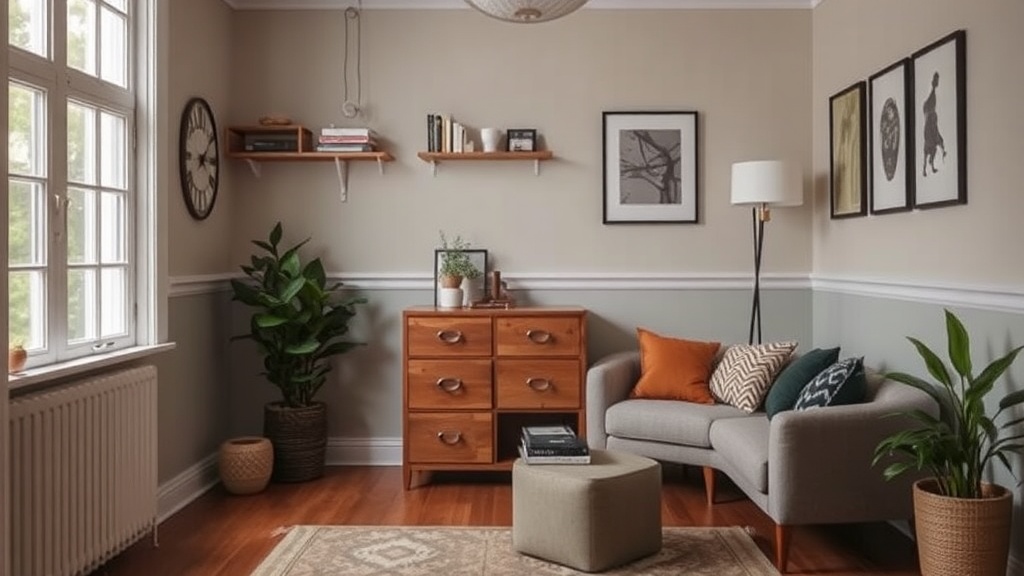
Could That Awkward Corner Actually Become Your Home's Best Storage Spot?

What Exactly Is an Awkward Corner—and Why Are We So Quick to Ignore Them?
Every home has them: those odd, angular spaces where walls meet at strange angles, where ceilings slope unexpectedly, or where a closet ends and leaves a two-foot gap that seems completely unusable. We walk past them daily. We stack boxes there temporarily (which turns into permanently). We tell ourselves we'll "figure something out" eventually—but that day never comes. Here's what this guide covers: practical, real-world strategies for transforming these overlooked pockets of square footage into functional storage and design features that actually make sense for your daily life. We're not talking about custom built-ins that cost thousands. These are approachable ideas—some DIY, some store-bought—that work with the architecture you've got, not against it. Because in a world where space comes at a premium (and rents keep climbing), ignoring even ten square feet of potential storage is something you can't afford to do anymore.
What's the Best Way to Use Space Under a Staircase?
The area beneath a staircase is perhaps the most infamous awkward corner in residential architecture. It collects dust, random shoes, and that vacuum cleaner you keep meaning to put away properly. But this triangular void—often spanning 20 to 40 square feet—is prime real estate waiting for a purpose.
Start by assessing the ceiling height gradient. The tallest point (usually near the bottom of the stairs) can accommodate standing-height functions: a compact home office with a wall-mounted fold-down desk, a reading nook with built-in bench seating, or even a small pantry system with pull-out drawers. As the ceiling slopes downward, shift to storage that doesn't require you to stand fully upright—shoe cabinets, file storage, or seasonal item bins you access only a few times yearly.
One approach that's gained traction in smaller homes: the stair drawer. Each riser becomes a pull-out drawer for shoes, linens, or even pet supplies. Companies like IKEA offer modular systems that can be adapted to fit these spaces, though custom carpentry will yield the most seamless results. The investment isn't trivial—but when you consider the cost per square foot of adding actual floor space to your home, the math starts working in your favor.
For renters or those on tighter budgets, freestanding furniture is your friend. A narrow console table placed against the stair wall creates instant surface area. Add a few woven baskets underneath for concealed storage. Paint the wall behind it a contrasting color, and suddenly that awkward corner becomes an intentional design moment—no construction required.
How Do You Work With Slanted Ceilings in Attic Bedrooms?
Attic conversions present a unique challenge: walls that angle inward, creating dead zones where standard furniture simply doesn't fit. The knee walls—the short vertical sections before the slope begins—often sit at heights between 3 and 5 feet, making them too low for most shelving but too tall to completely ignore.
The solution? Embrace the horizontal. Low, long storage units that follow the line of the wall transform these boundaries from obstacles into features. Think captain's beds with drawers built into the base, or cubby-style shelving that sits directly on the floor. The key is keeping the height under that angled intersection point—typically around 30 to 36 inches.
For clothing storage, garment racks on wheels can slide into these angled pockets, holding out-of-season items or accessories. Install a simple tension rod between two knee walls, and you've got hanging space for shorter items—shirts folded over hangers, scarves, or even children's clothing. The psychology here matters: when storage feels integrated rather than crammed in, the whole room reads as larger and more intentional.
Lighting plays a surprising role in making these spaces work. Awkward corners often suffer from poor natural light. Battery-powered puck lights, LED strips along the angled ceiling, or even a small plug-in wall sconce can transform a dark storage niche into a functional workspace or vanity area. Don't underestimate what good task lighting can do for a space's perceived utility.
Can That Gap Beside the Refrigerator Actually Store Anything Useful?
The 3-to-6-inch gap between your refrigerator and the wall (or cabinet) is one of the most frustrating architectural realities in modern kitchens. It's too narrow for standard storage, yet wide enough that it collects crumbs, lost magnets, and that sinking feeling that you're wasting space you desperately need.
Enter the rolling pantry: a slim, vertical storage unit on casters that slides into this gap like it was custom-built. These units—typically 4 to 6 inches wide and 24 to 30 inches deep—feature multiple shelves perfect for canned goods, spices, cleaning supplies, or even baking sheets and cutting boards. When you need something, you roll it out. When you're done, it disappears. Brands like The Container Store and various Amazon manufacturers offer options, though quality varies significantly. Look for units with solid casters (not plastic) and shelves with lips or rails to prevent items from falling during movement.
If a rolling unit feels too industrial for your aesthetic, consider a different approach: magnetic storage. The side of your refrigerator is essentially a blank wall. Magnetic spice jars, knife strips, or even small baskets can claim this vertical real estate. Just be mindful of heat dissipation—don't cover ventilation panels, and keep heat-sensitive items (certain spices, chocolate) away from the compressor side of the unit.
For slightly larger gaps—say, 8 to 12 inches—consider a narrow bookshelf turned sideways. The shallow depth becomes an asset: items can't hide behind each other, forcing you to maintain visibility and organization. It's not pretty storage, but it's honest storage—and sometimes that's exactly what a hardworking kitchen needs.
What About Those Weird Nooks in Older Homes?
Pre-war apartments, Victorian-era houses, and mid-century ranches all share a common trait: they weren't built with modern storage logic in mind. You'll find telephone alcoves that haven't held a landline in decades, radiator covers that consume entire corners, and built-in hutches with proportions that don't match anything you currently own.
The telephone nook—a small, wall-recessed shelf typically found in hallways or near kitchens—presents a fascinating opportunity. At roughly 12 to 18 inches wide and equally deep, these spaces are perfectly sized for modern alternatives: a charging station with a small shelf for keys and mail, a mini herb garden with a grow light, or even a compact bar setup for a few bottles and glasses. The architectural detail already draws the eye; your job is simply to give it a contemporary purpose.
Radiator covers, meanwhile, don't have to be purely functional eyesores. Custom or semi-custom covers with flat tops create instant surface area. Style them like any other console: a lamp, a stack of books, a small plant. The heat rising from below actually helps with plant health in winter months—just choose varieties that tolerate dry air. If you're handy, building a simple plywood cover with ventilation gaps isn't difficult, though you must ensure adequate airflow to prevent overheating.
Even chimney breasts—those awkward protrusions where fireplaces once lived—offer storage potential. The recessed areas on either side (called chimney alcoves) are perfectly sized for shallow bookcases or display shelving. Paint the back wall a bold color, and these former dead zones become architectural features that add character rather than compromise it.
How Do You Stop Wasting Space in Angled Closets?
Not all closets are the rectangles shown in design magazines. Many older homes feature closets with angled ceilings, sloped walls, or irregular footprints that make standard closet systems impossible. The instinct is often to throw everything in and close the door quickly—but these spaces can be surprisingly functional with the right approach.
Start by mapping the actual dimensions. Measure the height at multiple points, the depth at various locations, and any obstructions like soffits or ductwork. Armed with this information, you can choose storage components that fit the reality, not the ideal. Adjustable shelving systems with brackets that attach to side walls (rather than back walls) work well in angled spaces because they don't require a flat mounting surface throughout.
Consider unconventional hanging solutions. A clothing rod installed parallel to a sloped ceiling—rather than perpendicular—lets you hang shorter items where headroom exists. Use the lowest areas for shoe storage, folded items in bins, or accessory organizers. The goal is matching the storage type to the available height, rather than forcing standard solutions into non-standard spaces.
For deep, angular closets where items get lost in the back, pull-out solutions are worth the investment. A simple rolling cart or even a shallow drawer on glides brings the back corner forward when you need it. It's not elegant, but it works—and working storage beats beautiful storage you can't actually use. Sometimes the most sophisticated design decision you can make is simply acknowledging what a space can and cannot do, then building your system accordingly.
The truth about awkward corners is that they stay awkward only as long as we avoid them. Once you start measuring, really looking at the architecture, and accepting that standard solutions might not apply, these spaces reveal their potential. They're smaller than you'd like. They require compromise. But they're yours—and in a home that works hard for its occupants, every square foot deserves a job.