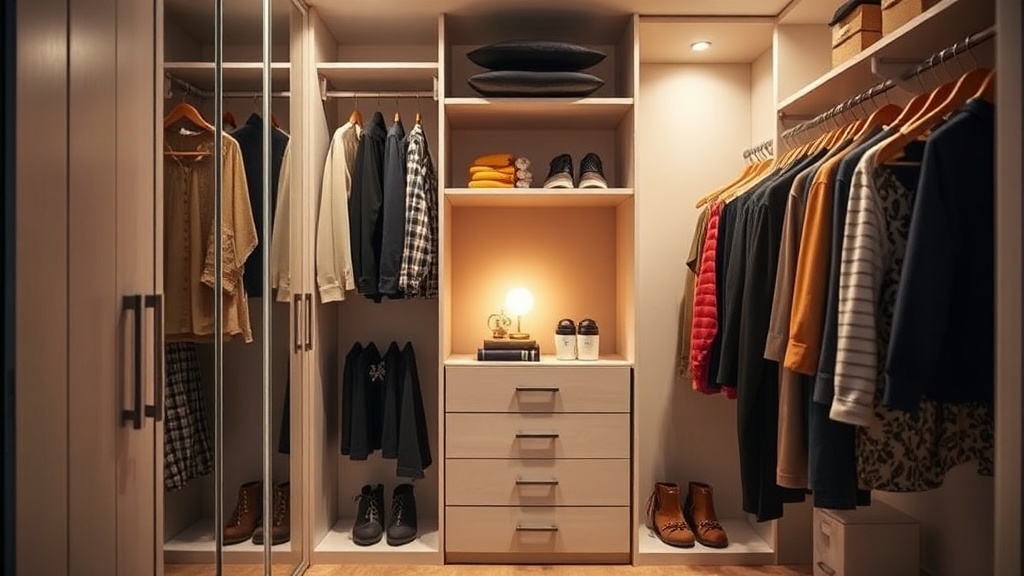
How to Maximize Your Small Closet Space in 3 Easy Steps

How do you organize a small closet without buying expensive systems?
You don't need a $5,000 custom installation to triple your usable space. Small closets (typically 24 to 36 inches deep and 4 to 6 feet wide) present a unique challenge—there's rarely room for error, and every inch counts. This guide covers three proven steps to reclaim dead space, eliminate clutter, and build a closet that actually works for daily life. Whether you're renting a studio in Nashville or organizing a guest bedroom, these tactics deliver measurable results without demolition or major investment.
What's the best way to declutter a closet before reorganizing?
Remove everything and sort ruthlessly before touching a single organizer. Most people skip this step—and waste money on storage solutions for items they'll never wear again.
Start with the KonMari method popularized by Marie Kondo, or use the simpler "one-year rule." Haven't worn it in 12 months? Donate it. No exceptions. That wool coat you keep "just in case"? If last winter passed without you reaching for it, it's taking up real estate.
Here's the thing—sentimental items trip everyone up. The concert tee from 2019 doesn't belong in prime hanging space. Box it, photograph it, or let it go. Your closet is for clothes you wear, not a museum of who you used to be.
Sort remaining items into four piles: keep, donate, sell (Poshmark and ThredUp work well), and relocate (off-season storage, perhaps). Be brutal. A closet that's 40% empty functions better than one stuffed to bursting. You'll see the floor again. You'll find things. It's oddly liberating.
Once the purge is complete, clean thoroughly. Vacuum corners. Wipe shelves. There's no better time—the space is actually empty. You'll start fresh. Literally.
How can I add more hanging space to a tiny closet?
Double your hanging capacity with a rod extender and slim hangers—two changes that cost under $50 combined.
Standard closets come with one rod at 66 inches high. That's a lot of wasted vertical space. The ClosetMaid Double Hang Closet Rod (about $16 at The Home Depot) drops a second rod at 42 inches—perfect for shirts, blouses, and folded pants. Suddenly, that single row becomes two. T-shirts on top. Jeans below. Done.
But here's where most people stumble: bulky plastic hangers. They're half an inch thick. Multiply that by 40 items. You're losing feet of linear space.
Switch to velvet slim hangers. The AmazonBasics Velvet Suit Hangers run roughly $25 for 50, and they're only 1/4 inch thick. That's half the space per item. They also grip fabric—no more silk blouses sliding to the floor at 6 AM. The flocked surface prevents the shoulder bumps that wire hangers leave behind.
Worth noting: not everything belongs on a hanger. Sweaters stretch. T-shirts wrinkle. These items fold better—and stack vertically in bins or on shelves. (More on that next.)
The Vertical Storage Strategy
Look up. Most closets have 12 to 24 inches of dead space above the top shelf. That's prime real estate for seasonal storage.
The IRIS Weathertight Storage Box (available at Target for approximately $18) seals out dust and stacks securely. Store winter coats in May. Swimsuits in December. Out of sight, out of mind—but accessible when needed.
For everyday access, consider an over-the-door organizer. The SimpleHouseware 24-Pocket Over-Door Shoe Organizer ($13) holds more than footwear. Scarves. Belts. Tights. Accessories that normally vanish into drawer voids suddenly have assigned homes. Clear pockets mean you see everything at a glance.
What storage containers work best in small closets?
Clear bins with lids for stacking, fabric cubes for open shelving, and slim drawer units for floor space.
Container choice makes or breaks a small closet. The wrong boxes create new problems—unlabeled cardboard, mismatched lids, bins that don't stack. Here's a breakdown of what actually works:
| Container Type | Best For | Top Pick | Price Range |
|---|---|---|---|
| Clear stackable bins | Seasonal clothes, shoes | Sterilite 66-Quart ClearView Latch Box | $8-12 each |
| Fabric storage cubes | Accessories, folded items | IKEA DRÖNA Box (13x15x13") | $6 each |
| Slim drawer units | Under-closet floor space | Sterilite 3-Drawer Wide Tower | $25-35 |
| Hanging shelf organizers | Sweaters, handbags | Whitmor 6-Shelf Closet Organizer | $15-20 |
The catch? Measure twice. A bin that fits your shelf on paper might not clear the door frame. Depth matters—standard closet shelves are 12 or 16 inches deep. Don't buy 18-inch containers hoping they'll "work."
Label everything. Masking tape and a Sharpie suffice. "Winter scarves." "Workout tops." "Guest room sheets." Future you will thank present you. Without labels, clear bins become mystery boxes you'll avoid opening.
Floor Space: Use It or Lose It
That 24-inch gap between the bottom of hanging clothes and the floor? It's not wasted—it's opportunity.
A narrow shoe rack (like the Seville Classics 3-Tier Resin Slat Utility Shoe Rack, $28) holds 9-12 pairs without extending past the rod above. Position it toward the front of the closet. Shoes go here. Boots on bottom. Flats on top. Easy.
If shoes live elsewhere, slide in a rolling drawer cart. The IKEA RÅSKOG Utility Cart ($40) fits surprisingly well in standard closets. Three tiers. Wheels for access. Perfect for workout gear, pajamas, or anything you grab daily.
Wall Space: The Forgotten Frontier
Side walls in reach-in closets often go untouched. They shouldn't.
Command Hooks (3M, $5-8 per pack) adhere without damage—crucial for renters. Hang tomorrow's outfit. A robe. A laundry bag. The large strips hold up to 4 pounds. That's a heavy winter coat.
For more capacity, install a small floating shelf on the side wall. The IKEA LACK Wall Shelf ($10) spans 11 inches. Perfume. Jewelry dish. A small plant (yes, closets deserve greenery too—try pothos, low-light champions).
Putting It All Together: A Real Example
Consider a typical 5-foot-wide reach-in closet. Here's what 3 hours of work produces:
- Top zone (above 66"): Two Sterilite bins—winter coats and formal wear, labeled, stacked.
- Upper rod (42-66"): Shirts and blouses on slim velvet hangers—roughly 40 items in 30 inches of width.
- Lower rod (18-42"): Pants folded over hangers, skirts, shorter items. Another 30+ pieces.
- Shelf above lower rod: Three IKEA DRÖNA boxes—accessories, workout gear, miscellaneous.
- Floor: Shoe rack with 10 pairs, rolling cart with folded sweaters.
- Door: 24-pocket organizer—belts, scarves, small handbags.
- Side wall: Three Command hooks—tomorrow's outfit, bathrobe, laundry bag.
Total cost: approximately $150. Total additional capacity: roughly triple the original space. That's not an exaggeration—double-hang rods alone add a full second row. Slim hangers compress the horizontal. Vertical storage claims the heights.
That said, maintenance matters. Spend five minutes each weekend returning items to assigned homes. The system only works if you work it. One month of neglect and you're back to chaos—it's the nature of small spaces. They demand respect.
For Nashville locals, the Container Store at The Mall at Green Hills offers free design consultations. Bring measurements. They'll sketch options. For budget alternatives, IKEA in Antioch stocks the PAX wardrobe system—modular units that transform awkward nooks into functional storage.
Small closets aren't design flaws. They're puzzles. With the right pieces—double rods, slim hangers, vertical bins, and disciplined editing—you'll wonder why you ever thought you needed more space. The room was there all along. You just couldn't see it.
"The goal isn't to fill every inch. It's to create breathing room—both for your clothes and for your morning routine." — Casey Diallo, Smart Storage
Start this weekend. Empty everything. Keep what moves you forward. Hang it efficiently. Box the rest. By Monday, getting dressed won't feel like archaeology. It'll feel like ease.
Steps
- 1
Declutter and Remove Unwanted Items
- 2
Organize Clothing by Category and Season
- 3
Install Shelves and Use Vertical Storage Solutions