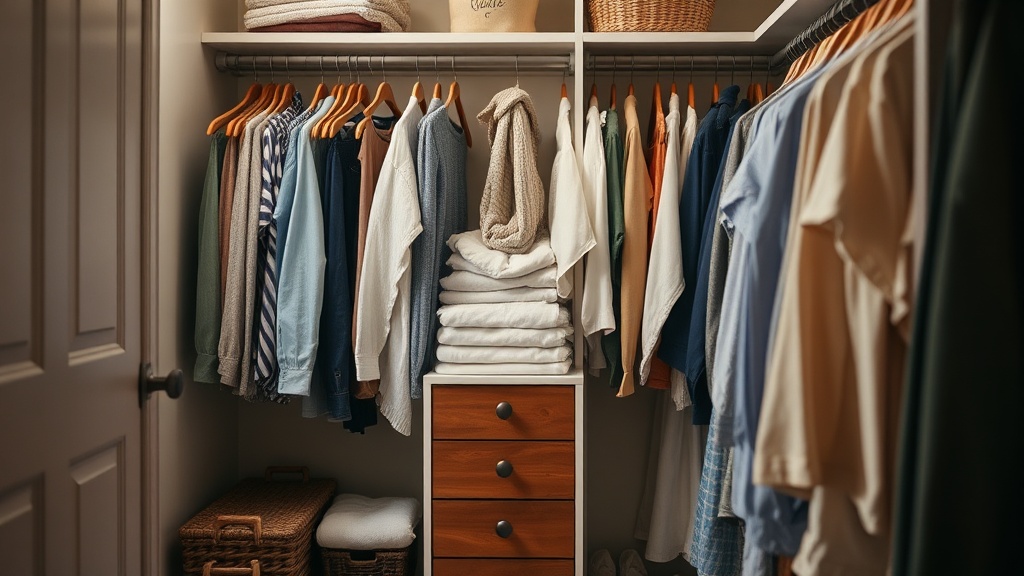
Is Your Linen Closet Actually Working Against You?

Does your linen closet feel more like a junk drawer than a functional storage space?
Most people treat the linen closet as an afterthought—a narrow space where towels, bed sheets, and seasonal blankets go to be forgotten. But a well-organized linen closet isn't just about neat piles; it's about maintaining the rhythm of your home. When you can't find a fresh hand towel or a specific set of pillowcases, your daily routine breaks down. This post explores how to rethink your linen storage through better visibility, smarter shelving, and intentional sorting.
The biggest issue with standard linen closets is the "black hole" effect. You pull one item out, and three more tumble down behind it. This happens because most closets rely on deep, unstructured shelves that encourage stacking rather than organizing. To fix this, you have to change how you think about depth and height. Instead of just piling sheets, we're going to look at how to create a system that keeps everything visible and accessible.
How do I organize my linen closet for maximum space?
The first step is a ruthless purge. You can't organize clutter, and linens are notorious for gathering "just in case" items that don't belong. Clear out the old, mismatched towels and the sheets that don't even fit your current mattress. Once you have a clean slate, you can focus on the actual layout.
- Use Shelf Dividers: These are small, often transparent or wire dividers that keep stacks of towels from leaning or falling over. They create distinct zones for different types of linens.
- Implement Clear Bins: For smaller items like washcloths, hand towels, or even guest toiletries, use clear bins. This allows you to see exactly what's inside without digging.
- Maximize Vertical Space: If your closet has a lot of empty air above the top shelf, consider adding a hanging organizer or an extra shelf unit.
If you're looking for specific dimensions to ensure your bins fit, the IKEA website offers great visual guides on various storage modules that work well in small spaces. Using standardized bins makes a huge difference because it prevents that messy, haphazard look that develops after just one week of use.
Should I use open shelving or closed doors for linens?
This is a common debate in interior design. While open shelving looks beautiful in a high-end spa setting, it can lead to dust accumulation in a standard home. Closed doors are better for hiding the visual noise of mismatched colors or slightly worn-out linens. However, if you use open shelving, your folding technique must be impeccable. A neat, uniform fold can actually become a design element rather than a source of stress.
For those who prefer a more aesthetic approach, consider using woven baskets on lower shelves. This hides the "ugly" side of storage while still keeping items within reach. According to Architectural Digest, the way we store textiles can significantly impact the perceived luxury of a room. A well-organized linen closet feels intentional, not just functional.
What is the best way to fold bed sheets?
There is nothing more frustrating than trying to find a matching set, only to realize the fitted sheet is a wrinkled mess. The secret isn't just folding; it's nesting. Most people find success by folding the flat sheet and the fitted sheet into neat rectangles, and then placing them inside one of the pillowcases from the same set. This creates a "linen kit" that is easy to grab and store without worrying about missing pieces.
When you're stacking, remember the weight rule. Heavier items, like thick winter blankets or heavy duvet covers, should live on the lowest shelf. This keeps the center of gravity low and prevents the top shelves from becoming unstable. Lighter items, like summer sheets and hand towels, belong on the eye-level shelves where they are easiest to grab.
"Order is a state of mind, but in a linen closet, it's also a matter of gravity and visibility."
Don't forget about the door. If you have a standard swinging door, a heavy-duty over-the-door organizer can hold much more than just towels. It can hold hair tools, extra soap, or even small hand towels. This frees up your primary shelf space for the bulkier items that actually require more room.
Before you start your reorganization, grab a measuring tape. Most people buy bins that are too deep for their shelves, leading to wasted space in the back. Measure the depth of your shelves and the height of the door clearance. If you're using a shelving unit, ensure it doesn't interfere with the door closing. A little bit of math goes a long way in preventing a frustrated afternoon of rearranging.
Lastly, keep a small basket or bin at the bottom for "to-be-laundered" items if your closet is near a laundry room. This prevents the dreaded pile of dirty towels from migrating to the bathroom floor. By treating the linen closet as a dedicated zone rather than a junk pile, you'll find that your home feels more cohesive and much easier to manage on a daily basis.