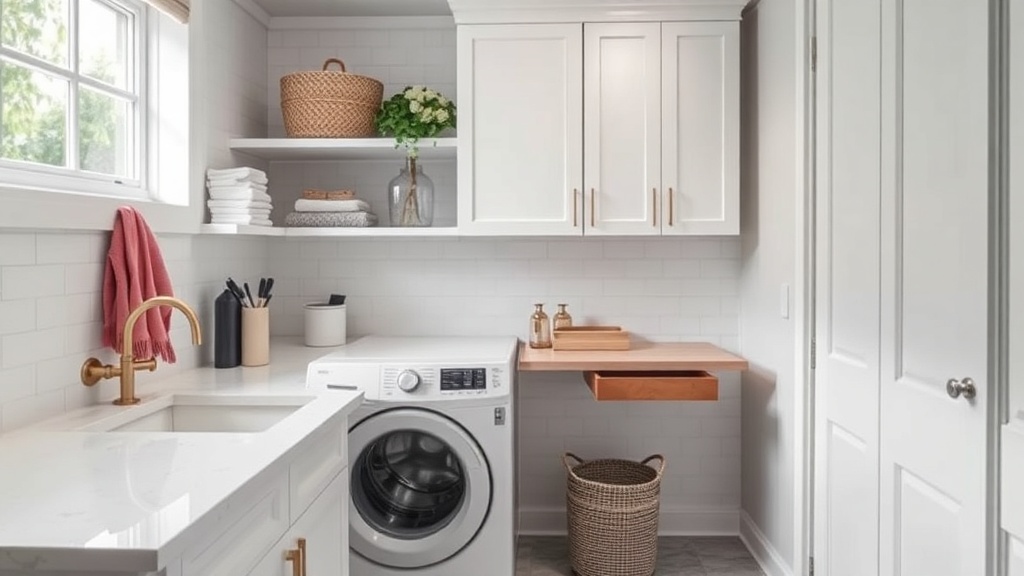
Laundry Room Layouts That Keep Your Workflow Smooth

Imagine a Tuesday morning where you're trying to sort a mountain of wet clothes, but the washing machine door hits your hip every time you move. You reach for the detergent, only to find the bottle is tucked behind a bulky fabric softener container, making a mess on the floor. This isn't just a minor annoyance; it's a breakdown in your daily rhythm. A poorly planned laundry room turns a simple chore into a physical obstacle course. This guide breaks down how to arrange your machines, counters, and storage to ensure your movement stays fluid and your workspace stays functional.
What is the Best Laundry Room Layout for Small Spaces?
The best layout for small laundry spaces is a single-wall or a compact L-shaped configuration that maximizes floor space. When you're working with tight quarters, every inch counts. A single-wall setup keeps all your heavy hitters—the washer, the dryer, and the sink—along one side of the room. This leaves the center open for you to move. If you have a corner available, an L-shape allows you to wrap the counter around the machines, providing a much-needed landing zone for folded clothes.
If you're dealing with a tiny closet-style laundry area, think vertically. You can't expand outward, so you have to go up. Using stacking units, like the LG WashTower, can save a massive amount of floor real estate. It's a smart way to keep your footprint small while maintaining full capacity.
Consider these three common layouts:
- The Galley: Two parallel walls of appliances and counters. Great for long, narrow rooms but can feel cramped if the aisle is too thin.
- The L-Shape: Perfect for corner placements. It offers a natural workflow from washing to drying to folding.
- The Single Wall: The ultimate space-saver. Everything sits in a line, leaving the rest of the room for walking or storage.
Don't forget about the laundry cycle itself. You need space to move a heavy basket from the machine to the folding surface without hitting a wall or a cabinet. If your layout doesn't allow for a 36-inch clearance, you're going to struggle.
How Do I Organize My Laundry Room for Efficiency?
Organizing for efficiency means grouping tasks by their specific stage in the cleaning process. You want a logical flow: sorting, washing, drying, folding, and storing. If your soap is on the opposite side of the room from your washer, you're wasting time and energy every single day.
Start with a dedicated sorting station. Instead of one giant hamper, use a multi-compartment sorter for whites, darks, and delicates. This prevents the "pre-wash scramble" where you're hunting for a specific bin. Once the clothes are clean, you need a wide, clear surface for folding. A countertop that extends over the top of your front-loading machines is a great way to gain this space.
A quick tip for verticality: use the space above your machines for shelving. This is a great place to keep things you don't use daily, like seasonal cleaning supplies or extra large jugs of detergent. If you're feeling stuck on how to use your walls, check out my thoughts on reclaiming your home's overlooked vertical space. It's a principle that applies perfectly to the laundry room.
| Task Stage | Required Tool/Surface | Placement Strategy |
|---|---|---|
| Sorting | Multi-compartment hamper | Near the entrance/entry point |
| Washing/Drying | Machines (Stacked or Side-by-Side) | Near water and electrical hookups |
| Folding | Wide, flat countertop | Directly adjacent to the dryer |
| Storage | Shelving or Cabinets | Above eye level or in high corners |
The goal is to minimize steps. If you can reach from the dryer to the folding table without taking more than two steps, you've won.
What Are the Most Important Dimensions for a Laundry Room?
The most important dimensions to remember are the depth of your machines and the clearance required for doors to open fully. Most standard washers and dryers are about 27 to 30 inches deep, but you must account for the hoses and the power cords behind them. A mistake many people make is failing to leave a 4-to-6-inch gap behind the machines for ventilation and plumbing. If you don't leave that gap, your machines might overheat or the hoses might get pinched.
Regarding door swing, check your clearance. If you have a front-loading washer, you need enough room to pull the door wide open to reach the back of the drum. If your layout places a cabinet or a wall too close to the door, you'll find yourself constantly fighting the machine just to get your clothes out.
Here are a few numbers to keep in mind:
- Counter Height: Aim for 36 inches. This is the standard kitchen height and makes folding much easier on your back.
- Walkway Width: Try to maintain at least 36 to 42 inches of walking space in front of your machines.
- Shelf Depth: For small items like detergent pods or stain removers, 6 to 12-inch deep shelves are plenty.
It's also worth looking at the Occupational Safety and Health Administration guidelines regarding workspace ergonomics if you spend a lot of time on your feet. While they mostly focus on industrial settings, the logic of avoiding repetitive strain and maintaining clear pathways is universal. A cramped, cluttered laundry room isn't just a mess—it's a safety hazard if you're tripping over baskets or slipping on spilled liquid-to-powder detergent.
When you're planning your layout, don't forget the lighting. A dark laundry room is a recipe for a dropped sock or a missed stain. If your room is small, avoid heavy, dark cabinetry that might make the space feel like a cave. Instead, use lighter colors or even a single bright pendant light to ensure you can actually see what you're doing.
One thing to consider is the drainage. If you're adding a utility sink, ensure it's positioned near your existing plumbing lines to avoid expensive renovations. A sink is a lifesaver for pre-treating heavily soiled items or cleaning out muddy sports gear, but it also takes up valuable real estate. If space is a premium, maybe a sink isn't in the cards for this specific layout.
If you're dealing with a cluttered cabinet under your sink, you'll find that most laundry room issues start with poor organization at the base level. I've written about taming that cluttered cabinet, and the same logic applies to your laundry utility sink. Keep your liquids organized and upright to prevent leaks that can ruin a nice floor.
Ultimately, a successful laundry room layout isn't about how pretty the room looks in a photo. It's about how much friction it removes from your weekly routine. If you can move from a pile of dirty clothes to a neatly folded stack without ever feeling stuck, you've designed a space that actually works for you.