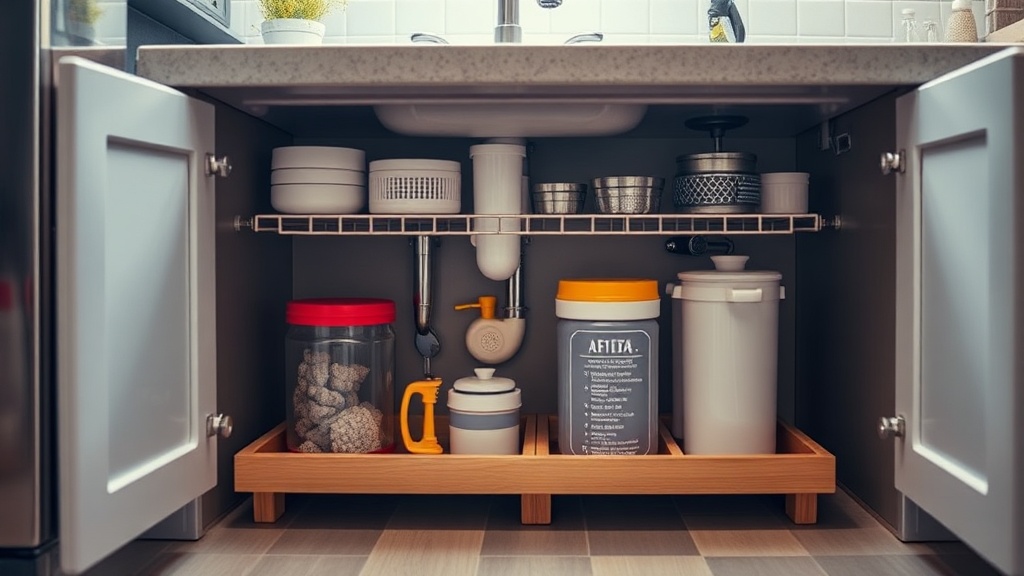
Why Most Under-Sink Storage Systems Fail and What to Buy Instead

Do you find yourself dreading the moment you have to reach under the kitchen sink for a fresh sponge?
Most of us treat that dark, cavernous space beneath our drains as a graveyard for half-used cleaning bottles and mysterious rags. It is one of the hardest areas in the home to keep tidy, yet it is where we store some of our most frequently used items. This guide covers why standard off-the-shelf organizers usually let you down and how to build a system that actually stays organized despite the pipes, the humidity, and the lack of light. Making this space work is not just about aesthetics; it is about saving time during your daily chores and preventing the slow destruction of your cabinetry from hidden leaks.
The primary reason most under-sink attempts fail is a total lack of planning for the plumbing. We buy these beautiful tiered shelves from big-box stores, get home, and realize the P-trap or the garbage disposal sits exactly where the second shelf should go. You end up with a lopsided mess that holds less than you had before. In Nashville, where I see a lot of older homes with creative pipe work, this is a constant headache. You need a system that adapts to your specific configuration rather than trying to force your pipes to move. It is a battle you will never win, so you might as well stop trying and start measuring.
Another factor people ignore is the environment itself. Cabinet interiors are often humid, dark, and prone to temperature shifts. If you use cheap materials like untreated wood or low-grade particle board, you are inviting mold and structural failure. I have seen countless homeowners invest in 'aesthetic' wooden organizers only to find them warped and smelling of mildew six months later. You want materials that can handle a drip or two without becoming a science project. Choosing the right surface is just as important as the layout itself.
Why is under-sink storage so difficult to manage?
The obstacle course of pipes is the most obvious hurdle, but the depth of the cabinet is the real silent killer of organization. Most standard base cabinets are 24 inches deep. If you are just setting bottles on the floor of the cabinet, anything in the back is effectively lost. You will find yourself buying a third bottle of all-purpose cleaner because you could not see the two hidden behind the dish soap. This creates a cycle of waste and clutter that makes the space feel smaller than it actually is. Without a way to bring the back of the cabinet to the front, you are just using the first six inches of your storage potential.
Lighting is another issue that people rarely think about until they are squinting at a label in the dark. Most kitchen and bathroom cabinets are built without integrated lighting, and the overhead kitchen lights rarely reach the back corners of a deep cabinet. This lack of visibility means you are less likely to put things back in their proper place. When you cannot see the designated spot for the window cleaner, you just toss it in and close the door. Over time, this laziness—born from poor visibility—erodes whatever organization you had in place. Small, motion-activated LED strips can change the way you interact with this space entirely.
Then there is the issue of weight. Cleaning supplies are heavy. A gallon of vinegar or a large jug of laundry detergent puts a lot of stress on flimsy plastic tiers. Many 'viral' organization kits use thin plastic legs that begin to bow under pressure. Once a shelf starts to sag, the bottles tilt, the sliding mechanisms stick, and the whole system becomes a nuisance rather than a help. You need something sturdy enough to hold the weight of your heaviest supplies without complaining. I always tell people to look for systems rated for at least twenty pounds per drawer if they plan on stocking up on bulk supplies.
Which materials actually hold up in damp cabinet environments?
When you are shopping for organizers, you should prioritize high-quality plastics or powder-coated metals. Clear acrylic is a popular choice because it allows you to see everything at a glance, and it wipes clean easily. However, you have to be careful with the quality of the acrylic. Thin versions can crack if you drop a heavy bottle of drain cleaner on them. Look for thick-walled bins that feel substantial in your hand. These are much more likely to survive the rigors of a busy kitchen. You can see some of the top-rated material choices in this breakdown from The Spruce, which highlights how different finishes react to moisture.
Avoid any organizer made of MDF or thin plywood unless it is specifically treated with a waterproof sealant. Even then, I would be wary. The area under a sink is naturally prone to moisture from condensation on cold water pipes. This moisture settles on the bottom of the cabinet and is absorbed by porous materials. Once MDF absorbs water, it swells and loses its structural integrity. If you absolutely love the look of wood, ensure it is a dense hardwood like teak or that it has a heavy polyurethane coating. Even so, metal or plastic is almost always the smarter buy for this specific part of the home.
Metal organizers are fantastic, but only if they are rust-resistant. Chrome-plated wire racks are common and inexpensive, but they can rust quickly if the plating is thin. Stainless steel or heavy-duty powder-coated steel is a much better investment. These materials can withstand the humidity without corroding. They also offer the benefit of being much stronger than plastic, allowing for smoother sliding mechanisms even when fully loaded. I prefer powder-coated finishes because they do not show fingerprints as easily and provide a little more grip for your bottles so they do not slide around when you pull a drawer out.
Should you choose pull-out drawers or stackable bins?
Pull-out drawers are generally the gold standard for under-sink storage because they solve the depth problem. By allowing you to slide the entire contents of the cabinet out into the light, they eliminate the need to crawl on your hands and knees to find a sponge. There are two main types: those that screw into the base of the cabinet and those that sit freely. If you are a renter, the freestanding versions are your only real option. Just make sure they have a weighted base or suction cups so the whole unit does not tip forward when you pull out a heavy drawer. Owners should almost always go for the screw-in versions for the added stability and smoother glide.
Stackable bins offer more flexibility, which is vital if you have a particularly chaotic pipe layout. You can move them around, stack them high in one corner, and keep them low in another. This modular approach is often cheaper and easier to install. However, bins have one major drawback: you have to move the top bin to get to the bottom one. This extra step is often enough to discourage people from maintaining the system. If you go the bin route, try to use them for items you do not need every day, like extra scrub brushes or seasonal cleaning supplies. For your daily-use items, a drawer is always going to be more convenient. For more ideas on how to mix these styles, Better Homes & Gardens has some excellent visual examples of hybrid systems.
Do not forget about the 'dead zone' often found behind the garbage disposal or the water filter system. This is where most organizers fail to reach. To use this space, I often recommend using small, individual bins that can be tucked into the gaps. You might not be able to fit a large drawer back there, but a narrow bin for extra dishwasher tabs or trash bags can turn that wasted space into a useful asset. It is all about playing the 'Tetris' game with your plumbing. Take the time to measure every single gap before you go to the store. A half-inch difference can be the reason a system fits or ends up back in the return line.
Before you install anything, I highly recommend laying down a waterproof silicone cabinet mat. These mats are designed with a raised lip that can hold several gallons of water in the event of a leak. It is a small investment that can save your cabinet floor from rot and mold. Once the mat is in place, you can build your organization system on top of it. This gives you peace of mind and an easy-to-clean surface. If a bottle leaks, you just pull out the organizers, wipe the mat, and you are back in business. It is a simple step that most people skip, but it is the foundation of a truly smart storage setup. Many professional designers emphasize this kind of preparation as seen in Architectural Digest, where protecting the cabinetry is priority number one.
Maintenance is the final piece of the puzzle. Even the best system will fail if you do not purge your supplies regularly. Every six months, take everything out and check for expired products or things you simply do not use. We all have that one bottle of specialty stone cleaner we bought three years ago and used once. If you are not using it, it is just taking up valuable real estate. Keeping your inventory lean is the best way to ensure your organizers stay functional. A crowded drawer is a stuck drawer, and a stuck drawer is a useless drawer. Keep it simple, keep it sturdy, and you will never have to wrestle with your cleaning supplies again.