Why Open Shelving Works Harder Than Cabinets in Modern Kitchens

This post breaks down exactly why open shelving has become the go-to storage choice for contemporary kitchens—and how to implement it without creating visual chaos. You'll learn the structural considerations, styling techniques, and practical organization methods that make open shelving functional rather than just fashionable.
What Makes Open Shelving Different from Traditional Cabinets?
Cabinets hide everything behind closed doors. Open shelving puts your kitchenware on display. That distinction changes how you think about storage entirely.
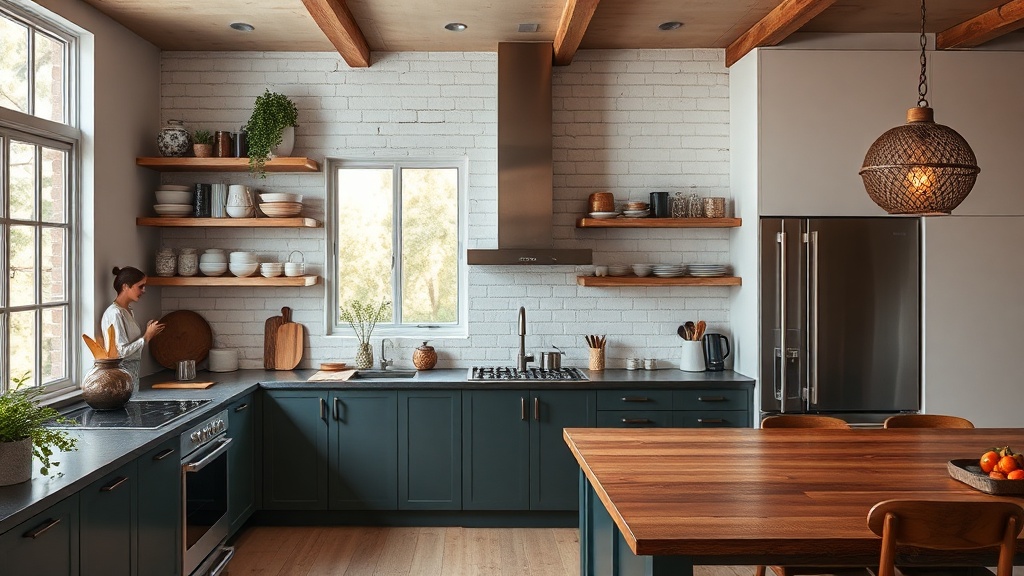
Traditional upper cabinets consume significant visual space—they create heavy horizontal lines that can make kitchens feel smaller, especially in rooms with standard eight-foot ceilings. Open shelving removes that visual weight. The wall behind becomes part of the room's design rather than something obscured by boxy cabinetry. Your eye travels further, and the space breathes differently.
There's a practical advantage too. When you can see what you own, you use it more. That set of nesting bowls tucked behind a cabinet door? You forget it exists. Those ceramic plates arranged on a floating shelf? They become part of your daily routine. Open shelving forces intentional curation—you keep what you use and love, not what you've accumulated and forgotten.
The cost difference matters for renovations. Quality cabinet doors, hinges, and hardware add up quickly. Open shelving requires brackets (or concealed floating supports), the shelf material itself, and finishing. For a typical kitchen with ten linear feet of upper storage, you're often looking at significant savings—money that can redirect toward better appliances or countertop materials.
Of course, this approach isn't universal. It works best when you have a cohesive dish collection. Mismatched plastic containers and promotional mugs from 2008 don't improve with display. The honesty of open shelving cuts both ways—it showcases beautiful items and exposes cluttered ones.
How Do You Install Open Shelving That Actually Holds Weight?
The biggest fear with open shelving is collapse. Nobody wants their grandmother's china crashing down at 2 AM. Proper installation eliminates that risk entirely.
First, understand your wall structure. Drywall alone won't support heavy loads. You need to anchor shelves into studs—or use heavy-duty toggle bolts rated for at least 50 pounds each if studs don't align with your desired placement. For floating shelves (the kind without visible brackets), internal bracket systems typically require drilling into studs anyway. The shelf slides over a metal framework that's screwed directly into the wall's structural elements.
Weight distribution matters as much as total weight. A shelf rated for 100 pounds spread evenly across its length might fail if you cluster everything on one end. Place heavier items—cast iron skillets, dense ceramic crocks—near the supports rather than the shelf's outer edge. Light items like glassware and small bowls can occupy the span between brackets without issue.
Depth affects stability significantly. Kitchen open shelving typically ranges from 10 to 12 inches deep—deep enough for standard dinner plates (which run about 10-11 inches) but shallow enough that items remain accessible. Deeper shelves create more cantilevered weight and can feel imposing in smaller kitchens.
Material choice impacts both aesthetics and load capacity. Solid wood shelves (oak, maple, walnut) handle weight beautifully but can warp if not properly sealed against moisture. Plywood with hardwood veneer offers excellent stability at lower cost. Reclaimed wood brings character but requires inspection for hidden structural weaknesses. For a truly modern look, steel shelves with concealed mounting create an industrial aesthetic while supporting substantial weight.
The installation sequence matters: mark stud locations, hold shelves in position with a level, mark drilling points, install brackets, then attach shelves. Skipping the level check creates the mildly infuriating experience of watching a ceramic bowl slowly slide toward the floor.
What Should You Actually Store on Open Kitchen Shelves?
This is where styling meets sanity. The instinct to display everything creates visual noise. The instinct to display only pristine items creates impractical kitchens. The solution lives in the middle.
Start with frequency of use. Items you reach for daily—coffee mugs, drinking glasses, everyday plates—belong on open shelves. The efficiency gain is real: no opening doors, no reaching into shadowed cabinet interiors. You grab and go. Items used weekly rather than daily—specialty baking pans, serving platters—can occupy higher shelves or less accessible positions.
Color coordination isn't pretentious when everything's visible. White dishes create a clean, unified look that expands visual space. Earth tones—terracotta, sage, cream—bring warmth without overwhelming. If you own a colorful collection, group like colors together rather than scattering them randomly. The eye processes organized color blocks more easily than visual confetti.
Leave breathing room. A shelf packed edge-to-edge looks like a storage unit, not a designed space. Aim for 20-30% empty space on each shelf. This isn't wasted space—it's what allows individual items to register as intentional choices rather than accumulated stuff. That negative space also makes dusting easier, which you'll appreciate within the first month.
Vertical layering adds interest. Place a small cutting board or decorative tray behind shorter items to create depth. Stack bowls at varying heights rather than uniform towers. Lean a single cookbook with a beautiful cover against the wall. These arrangements look considered without requiring professional styling skills.
Avoid the common mistake of displaying food items in original packaging. That half-empty box of granola bars doesn't improve your kitchen's appearance. Transfer dry goods to matching glass or ceramic containers if you want them visible, or store them in pantries and drawers if you don't. The same applies to cleaning supplies—keep them hidden unless you're specifically going for an industrial aesthetic.
How Do You Keep Open Shelves Clean Without Constant Maintenance?
The dust concern is legitimate—just not insurmountable. Open shelving in kitchens actually faces less dust accumulation than shelving in living rooms or bedrooms because cooking activity creates air movement that prevents the stillness where dust settles. Grease is the bigger consideration, particularly near ranges.
Strategic placement helps enormously. Install open shelving away from the cooktop's immediate vicinity if possible. The wall beside the refrigerator, the space above a coffee station, or areas near the sink work beautifully. If your kitchen layout requires shelving near cooking surfaces, choose materials that clean easily—sealed wood, powder-coated metal, or laminate rather than raw, porous surfaces.
Establish a weekly rhythm. Five minutes with a microfiber cloth, top to bottom, prevents buildup. When you remove items for washing anyway—plates after dinner, mugs after breakfast—give the shelf a quick wipe before replacing them. The visibility that makes open shelving attractive also makes dirt obvious, which is actually an advantage. You clean when needed rather than discovering grimy cabinet interiors during annual deep cleans.
Consider your local environment. Kitchens in humid climates face different challenges than arid ones. Wood shelves may need more frequent sealing. Metal shelves in coastal areas require corrosion-resistant finishes. These aren't dealbreakers—just factors in material selection.
When Should You Choose Closed Storage Instead?
Open shelving isn't morally superior to cabinets. It's a tool that solves specific problems while creating specific tradeoffs. Understanding when cabinets make more sense keeps your kitchen functional.
If you collect small appliances—stand mixers, blenders, food processors—you'll want at least some closed storage. These items create visual clutter even when arranged neatly, and their cords and bases don't photograph well for Pinterest. A single appliance garage or cabinet section corrals this category without eliminating access.
Same applies to plastic storage containers. The mismatch of sizes, colors, and lid situations defies attractive arrangement. These items belong behind doors, ideally in pull-out drawers that prevent the dreaded "container avalanche" when you reach for a single leftover bowl.
Renters face particular constraints. If you can't drill into studs—or if your landlord specified no wall modifications—free-standing open shelving units exist, but they consume floor space and lack the integrated look of wall-mounted options. In these cases, removing upper cabinet doors (if permitted) creates a similar aesthetic without structural changes.
The hybrid approach often wins. Many kitchens now combine open shelving for display-worthy items with closed cabinets for everything else. A common configuration: open shelves flanking the range hood for cookware and cookbooks, with traditional cabinets along remaining walls. This gives you the visual interest and accessibility of open storage without sacrificing the practical hiding places that make daily life manageable.
Your kitchen should work for how you actually live, not how you imagine living in an idealized version of your life. Open shelving rewards those who maintain relatively minimal dish collections and don't mind visible organization. Cabinets forgive those who prioritize function over form and own more stuff than they care to curate. Neither choice reflects personal worth—just practical preference.
For more guidance on kitchen organization systems, the National Kitchen and Bath Association offers professional resources on storage design. The shelving guides at Apartment Therapy provide visual examples of different approaches in real homes. And Bob Vila's installation tutorials walk through the technical details for various wall types.