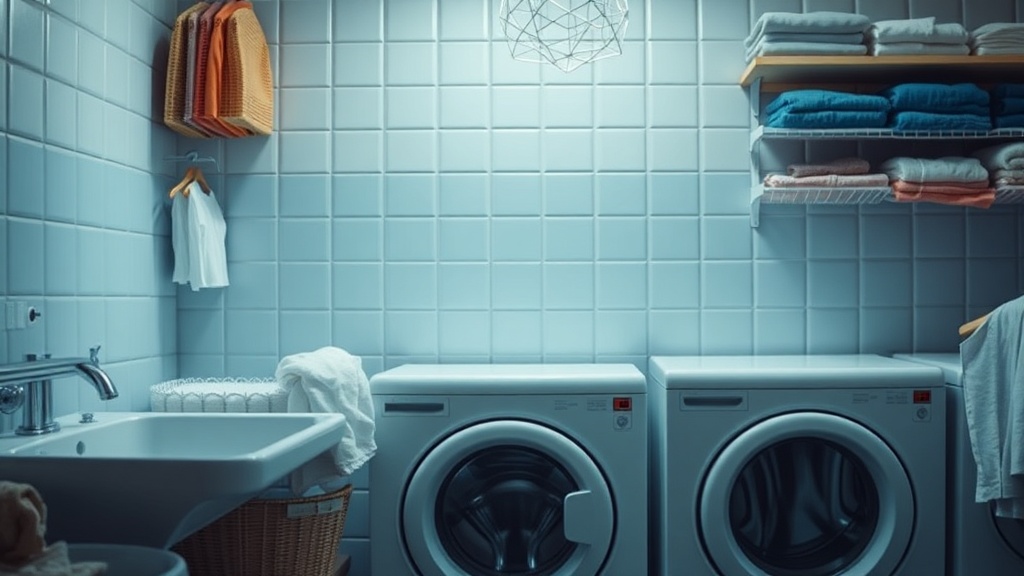
Your Laundry Room is Stalling Your Sunday: Better Ways to Sort, Dry, and Actually Finish the Fold

Your Laundry Room is Stalling Your Sunday
You’re staring at three plastic hampers overflowing onto the linoleum, a damp towel draped over the doorframe, and a dryer that just beeped for the third time while you’re hunting for a matching pair of gym socks. It’s not just a messy room—it’s a bottleneck that eats your entire Saturday. Most laundry rooms are treated as afterthoughts, squeezed into narrow hallways or dark basements without a plan for how clothes actually move through them. Fixing this doesn't require a five-figure renovation; it requires rethinking the flow from the moment a shirt hits the floor until it’s back in the drawer. We often spend so much time focusing on the machines themselves that we forget about the 'stations' that make the work actually happen.
If your current process involves carrying heavy baskets across the house only to realize you forgot to separate the darks, you’re working too hard. The goal is to minimize the number of times you touch a piece of clothing. A well-organized space should act as a staging ground that moves items from 'dirty' to 'done' without the need for constant shuffling. In Nashville, where we deal with everything from humid summers to muddy spring rains, having a dedicated spot for every stage of the process is the only way to keep the chaos from spreading to the rest of the house. Let’s look at the specific zones that usually break down and how to put them back together.
Where should you actually sort dirty clothes to save time?
If you’re waiting until you’re standing in front of the washer to separate your whites from your indigo jeans, you’ve already lost the battle. The most effective homes treat sorting as a passive activity that happens the second a garment is taken off. Instead of one giant 'catch-all' basket in the bedroom, try a triple-sorter system. You know the ones with the canvas bags on a rolling frame? They are a massive help. Labeling them 'Hot,' 'Cold,' and 'Delicates' means you can literally grab a bag and dump it straight into the machine without a second thought. This simple change alone can shave twenty minutes off your laundry cycle because the decision-making is already finished.
For those with a bit more cabinet space, pull-out hampers are a dream. They hide the mess behind a door while keeping the categories separate. If you’re building or retrofitting cabinets, look for wire baskets that allow for airflow. Nobody wants damp gym clothes sitting in a sealed plastic bin for four days—that’s a recipe for smells that no amount of scented detergent can fix. If you can’t hide the bins, choose aesthetically pleasing wicker or felt options that fit into your existing decor style so they don't look like an eyesore in the hallway. The key is to make it easier to put things in the right bin than it is to throw them on the floor.
Don't forget about the 'pre-treat' station. Keep a small basket or shelf right above your sorting bins with a stain stick and a mesh bag for small items like socks or lingerie. When you see a grass stain on a pair of kid's pants, you can hit it with the treatment immediately before it goes into the darks bin. This prevents that frustrating moment where you pull a 'clean' shirt out of the dryer only to find the stain has been baked in forever. It’s about creating a system where the next step is always obvious and the tools you need are within arm's length.
Which drying rack systems save the most floor space?
Floors are for walking, not for propping up rickety wooden racks that tip over if you hang a heavy pair of khakis on one side. If you have a small room (or just a corner of the garage), look up. Ceiling-mounted drying racks, often called laundry pulleys or 'airers,' are a classic for a reason. They keep damp clothes in the warmest part of the room—near the ceiling—and completely clear of your walking path. You simply lower the rack, hang your clothes, and hoist it back up. It’s a bit of an old-school solution, but it’s incredibly effective for heavy items like sweaters or jeans that need hours to air dry.
For those who can’t or don't want to drill into the ceiling, wall-mounted accordion racks are the next best thing. They fold flat against the drywall when you aren't using them, which is a big win for narrow laundry closets. You can install these at different heights—lower for kids' clothes and higher for long dresses or coats. Another smart move is a retractable clothesline. It’s a tiny disc on the wall that pulls out when you need it and disappears when you don't. It’s perfect for those three or four items that can't go in the heat but don't justify a full rack taking up space.
You also need to think about flat drying. Some delicate wools or knits will stretch out of shape if they are hung on a line. A stackable mesh drying rack can sit on top of your washer or dryer, providing a flat surface for air to circulate around the garment without taking up any extra square footage. If you’re tight on space, some companies even make drawer inserts that are just a mesh screen for this exact purpose. According to the experts at The Spruce, proper airflow is more important than heat for many fabrics, so don't feel like you have to blast everything in the dryer to get it done quickly.
How do you stop the clean laundry pile from taking over your surfaces?
The 'clean pile' is the ultimate productivity killer. It usually starts because there isn't a dedicated spot to land the clothes once they come out of the heat. If you have front-loading machines, the easiest fix is a solid countertop installed directly over the top of the pair. This gives you a wide, flat area to fold shirts immediately. No more carrying a basket to the couch where 'folding' turns into 'watching three episodes of a show while the clothes get wrinkled.' If you’re a Nashville local, you might appreciate a sturdy butcher block top for that warmth, but even a simple melamine shelf cut to size works wonders.
If you have top-loading machines, a countertop isn't an option, but a wall-mounted folding table is. These are hinged surfaces that stay flush against the wall until you need them. Pull it down, fold your load, and click it back into place. It’s about maintaining that 'folding zone' so you don't get tempted to leave the clothes in the basket. Also, consider adding a short hanging rod under a cabinet or shelf. As soon as a shirt comes out of the dryer, put it on a hanger. This prevents wrinkles and means one less thing to fold later. It’s a small habit that makes a giant difference in how your closet looks on Monday morning.
Last, let's talk about the 'lost and found.' We’ve all got that one basket of mismatched socks or the random coins and receipts that fall out of pockets. Instead of letting these items clutter up your folding surface, get a set of small, uniform bins or glass jars. A 'Lost Socks' jar is a cute touch, but it’s also functional. When you find the match three loads later, you know exactly where the first one is. Keeping these small items contained prevents the 'clutter creep' that eventually makes you want to avoid the laundry room altogether. When every category has a home, the room stays a tool for your home rather than a source of stress.
Try to avoid the temptation to buy every plastic gadget you see in the store. Start with the flow—sorting, then washing, then drying, then folding. Once you understand where your specific bottleneck is (is it the wet clothes on the floor or the clean clothes on the dryer?), you can pick the one or two pieces of hardware that actually solve the problem. You might find that simply adding a rod and a few better bins changes the way you feel about the whole chore. A functional laundry room isn't about luxury; it's about reclaiming your time so you can actually enjoy your home instead of just maintaining it.
| Zone | Action | Equipment Ideas |
|---|---|---|
| Sorting | Passive separation | Triple-sorter, pull-out bins, mesh bags |
| Drying | Airflow management | Ceiling pulley, accordion rack, retractable line |
| Folding | Immediate finishing | Countertop, wall-mounted table, hanging rod |