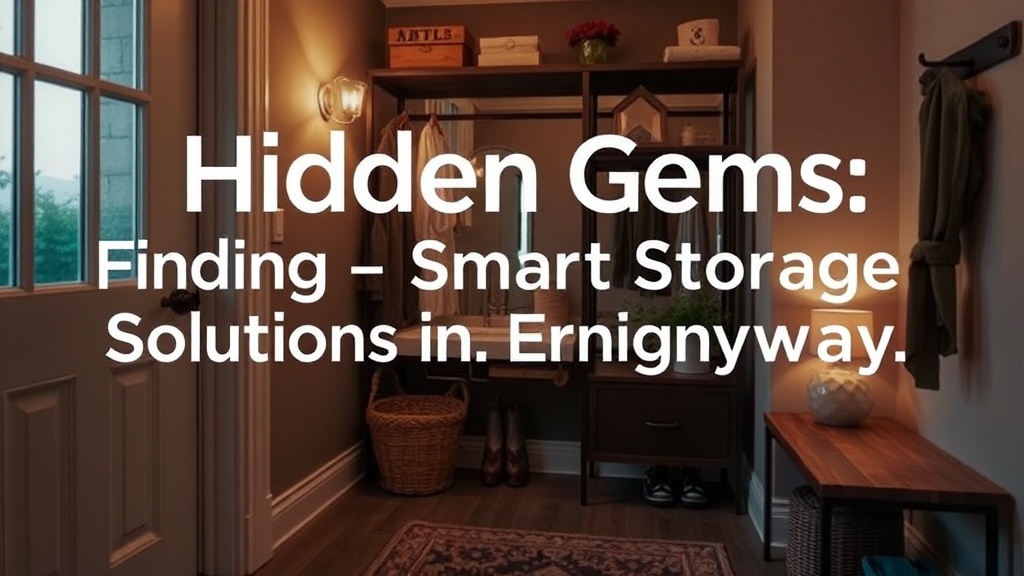
Hidden Gems: Finding Smart Storage Solutions in Your Entryway

Studies from the National Association of Home Builders suggest that the average American spends several minutes every single morning just looking for misplaced keys, shoes, or a specific bag. That's time you'll never get back. This post looks at how to transform your entryway from a cluttered drop zone into a high-functioning transition point through strategic furniture, vertical organization, and smart zoning. We'll look at specific products and layout strategies to ensure your first impression—and your daily exit—is actually smooth.
The entryway is often the most neglected part of a home. It's the first thing you see when you walk in, and the last thing you see when you leave. If it's a mess, your whole mood for the day might take a hit. We're diving into the practicalities of much-needed organization.
What are the best storage solutions for small entryways?
The best storage solutions for small entryways focus on verticality and multi-functional furniture that doesn't block foot traffic. If you're working with a tight hallway, you can't afford to use floor space for everything. You need to look up.
Wall-mounted hooks are a classic for a reason. They keep things off the floor and out of the way. However, a single hook isn't enough for a family of four. You'll want a dedicated system. Think about a heavy-duty pegboard or a sleek rail system like the IKEA SKÅDIS pegboard system. It's modular, so you can move the containers and hooks around as your needs change. It's also great for small items like sunglasses or keys.
Another option is a slim console table. You don't need a massive piece of furniture; a narrow table or even a floating shelf can provide a landing strip for your mail and phone. If you're short on space, a floating shelf is a lifesaver. It keeps the floor clear, which makes the room feel larger (a trick I use in my own Nashville home constantly).
Consider these three categories for your entryway setup:
- The Landing Zone: A small tray or bowl for keys, wallets, and loose change.
- The Outerwear Station: Hooks or a slim coat rack for jackets and bags.
- The Footwear Station: A shoe bench or a low-profile cabinet to keep shoes contained.
If you're already struggling with tight quarters elsewhere, you might want to check out clever storage hacks for small spaces to see how to apply these principles to the rest of your home.
How much does entryway organization cost?
Entryway organization costs vary widely depending on whether you buy budget-friendly bins or high-end custom cabinetry. You can outfit a functional entryway for under $100 using basic organizational tools, or spend thousands on custom built-ins.
Let's look at a breakdown of typical spending levels for an entryway refresh:
| Budget Level | Typical Items | Estimated Cost |
|---|---|---|
| Minimalist | Wall hooks, a small tray, and a basic shoe rack. | $30 - $75 |
| Mid-Range | A wooden console table, a sturdy bench, and a wall-mounted organizer. | $150 - $400 |
| Premium | Custom built-in cabinetry, designer lighting, and high-end wood finishes. | $1,000+ |
For those on a budget, don't overlook the power of a simple basket. A large, sturdy basket from a place like Target or Amazon can hold bulky items like umbrellas or seasonal hats without looking messy. It's a cheap way to add texture and organization at the same time.
The goal isn't to spend the most money; it's to solve the specific friction point in your routine. If you always lose your keys, buy a dedicated key holder. If your shoes are a pile by the door, buy a shoe cabinet. It's about utility over aesthetics—though, with the right pieces, you can have both.
Where can I find high-quality entryway furniture?
You can find high-quality entryway furniture at a variety of retailers ranging from big-box stores to specialized interior design outlets. The "best" place depends entirely on your personal style and your budget.
If you want something modern and functional, IKEA is hard to beat. Their modular systems are perfect for those who like to tinker with their layout. If you're looking for something a bit more substantial and classic, West Elm offers beautiful mid-century modern pieces that act as a focal point.
For those who want durability, look into solid wood options. A heavy-duty bench can handle more than just a coat; it can hold the weight of someone sitting down to tie their laces. If you're looking for something incredibly specific, sometimes the best "store" is a local thrift shop or even a Facebook Marketplace find. I've found some incredible vintage wooden consoles that look much more expensive than they actually were.
Don't forget the importance of lighting. An entryway without a light source feels cave-like and uninviting. A small, stylish lamp on a console table can make a world of difference. It's a small detail, but it changes the entire vibe of the room.
If you're feeling ambitious, you can even look into interior design principles via Wikipedia to understand how light and scale affect a small space. Understanding these basics helps you make better purchasing decisions.
The "One-In, One-Out" Rule for Entryways
This is a rule I live by. If you bring a new pair of boots into the house, an old or worn-out pair has to leave. This prevents the "clutter creep" that happens when we try to store everything at once. It keeps your entryway functional rather than a dumping ground for things you don't actually use.
It's easy to let the entryway become a graveyard for things that don't have a home yet. A stray scarf, a single glove, a magazine from three weeks ago—it all adds up. By setting a strict boundary, you maintain the integrity of your space.
Think about your vertical space. If you've run out of floor room, look up. A high shelf can hold items you don't use every day, like seasonal decorations or extra scarves. This is part of the same logic found in reclaiming your home's overlooked vertical space. Use the walls to keep the floor clear.
One last thing: check your lighting. A dim entryway feels cluttered even if it's clean. A bright, well-lit space feels organized and welcoming. It's a psychological trick that works every time.